Craft Seminar: Writing the Enemy: Revenge, Confrontation and Satire
Craft Seminar: Writing the Enemy: Revenge, Confrontation and Satire
2 Sessions: Saturdays, March 13 + 20
12:00-1:30pm ET
Jordy Rosenberg
Famously, for the first decade of his career, Pier Paolo Pasolini - firmly convinced that only the working classes and the impoverished were worthy subjects of artistic attention - refused to depict the bourgeoisie in his films. When he finally did (in Teorema), it was only to inflict a relentless series of humiliations on a fictional bourgeois family until its members unravel - abject, exposed, and broken. Pasolini’s changing convictions, and Teorema’s gleefully destructive relationship to its characters, raise a series of broader questions for us in this workshop: how (and to what purposes) do we write enemies, and how do we understand this particular kind of literary praxis in a moment (like Pasolini’s, like our own) of robust reawakening of the arts as a front of struggle.
What have leftist writers done with their enemies in fiction? Named and exposed them; eroded their mythos and aura; satirized them; staged their dissolution; celebrate their downfall; put them through humiliating tribulations (see above). What kinds of genres, stylistic conceits, and other structural elements have writers used in these efforts? We will explore a range of approaches, drawn from genre fiction (such as the burgeoning subgenre of trans horror), experimental literary fiction, and canonical realist works. Looking at touchpoints like Bolaño’s fascist-collaborator narrator, Grace Byron’s trans commune hijacked into cultish bloodbath, Emile Zola’s hellish, industrial-era mines, and John Keene’s fantasied first-contact fables, we will study traditional novelistic tools like POV and suspense/pacing, alongside innovative techniques like radical defamiliarization, flourish and excess, prose parataxis, and irreverent arrangements of temporality, to think about how we might develop, borrow, tweak and be inspired by these texts for our own work. We will also ask questions about how to experiment with limit and refusal in our writing as well. How poetically can a fascist character be permitted to think? Do we give beautiful words to terrible characters? Rich imaginations? Full interior lives? There are as many ways of approaching these questions as there are novels. Our class will consist of lecture, discussion, and a few prompts meant to open up places where writers may be stuck specifically around these questions, with the aim of synthesizing the writerly expression of pointed, righteous anger with our “limitless, creative faith in the future” (L. Trotsky).
Highlights: Students will…
Explore a range of approaches, drawn from genre fiction, experimental literary fiction, and canonical realist works, such as Bolaño’s fascist-collaborator narrator, Grace Byron’s trans commune hijacked into cultish bloodbath, Emile Zola’s hellish, industrial-era mines, and John Keene’s fantasied first-contact fables.
Study traditional novelistic tools like POV and suspense/pacing, alongside innovative techniques like radical defamiliarization, flourish and excess, prose parataxis, and irreverent arrangements of temporality, to think about how we might develop, borrow, tweak and be inspired by these texts for our own work.
Discuss and receive prompts on experimenting with limit and refusal in our writing as well. How poetically can a fascist character be permitted to think? Do we give beautiful words to terrible characters? Rich imaginations? Full interior lives? There are as many ways of addressing these questions as there are novels. We will try to cover as many of these approaches as we can in the time allotted.
To apply for a scholarship, please fill out this form by Friday, March 5.
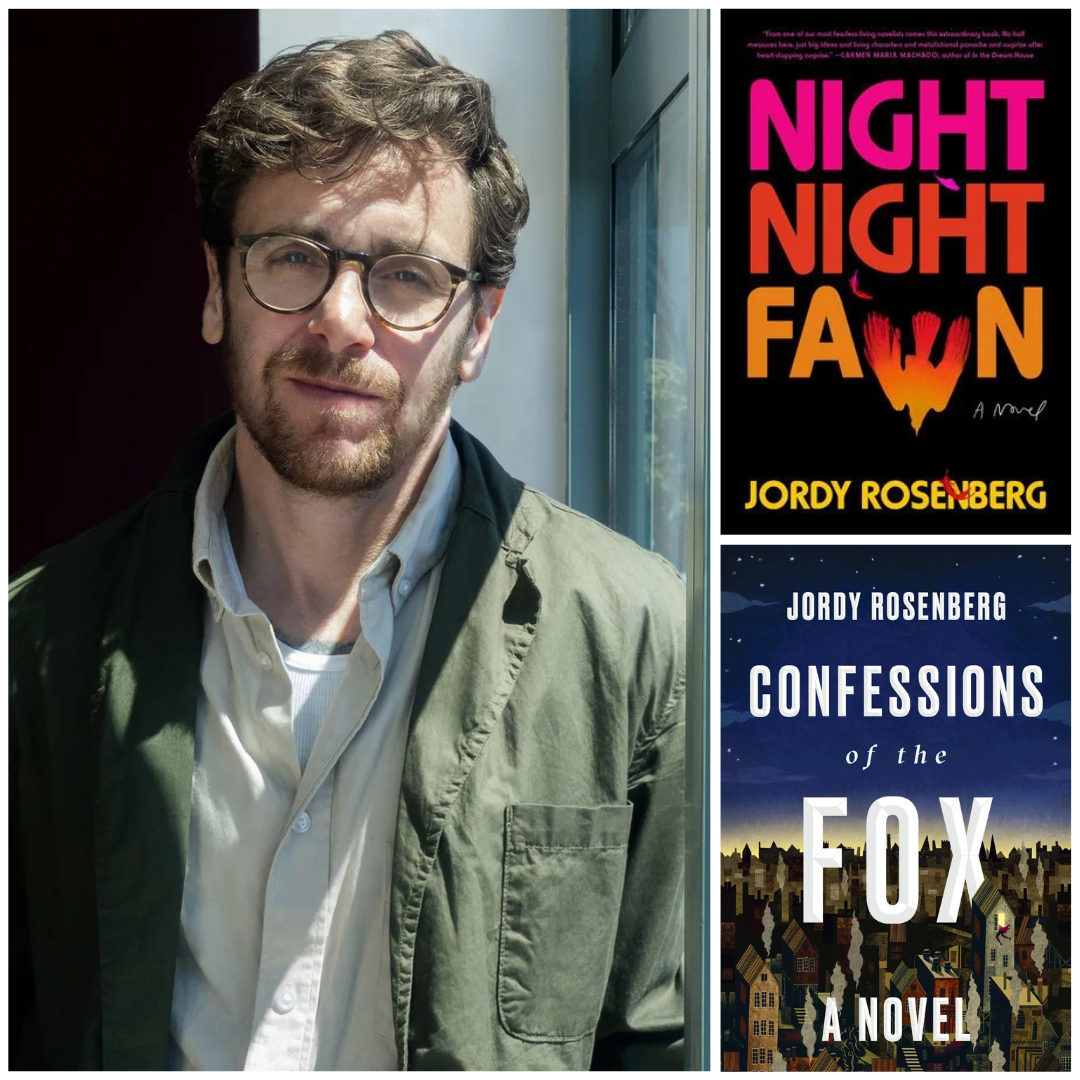
Jordy Rosenberg is the author of two novels Night Night Fawn (One World, 2026) called a “rant of comedic genius” by The New York Times and “incendiary” by Publisher’s Weekly, and Confessions of the Fox (One World/Random House, 2018). Booklist raved, “Resonant of George Saunders, of Nikolai Gogol, and of nothing that’s ever been written before...irreverent, erudite, and not to be missed.” A New York Times Editors' Choice Selection, Confessions was shortlisted for the Center for Fiction First Novel Prize, a Lambda Literary Award, a Publishing Triangle Award, the UK Historical Writers Association Debut Crown Award, and longlisted for The Dublin Literary Award. Confessions was named by The New Yorker, among other places, as one of the Best Books of 2018. Confessions of the Fox is one of the first novels written by a transgender writer, edited by a non-binary editor, and published by a major publishing house.