Reginald Dwayne Betts
“I have learned to weep in a world that rarely forgives weakness and falsely believes that weeping is for the weak. I believe in the wonderment of it all.”

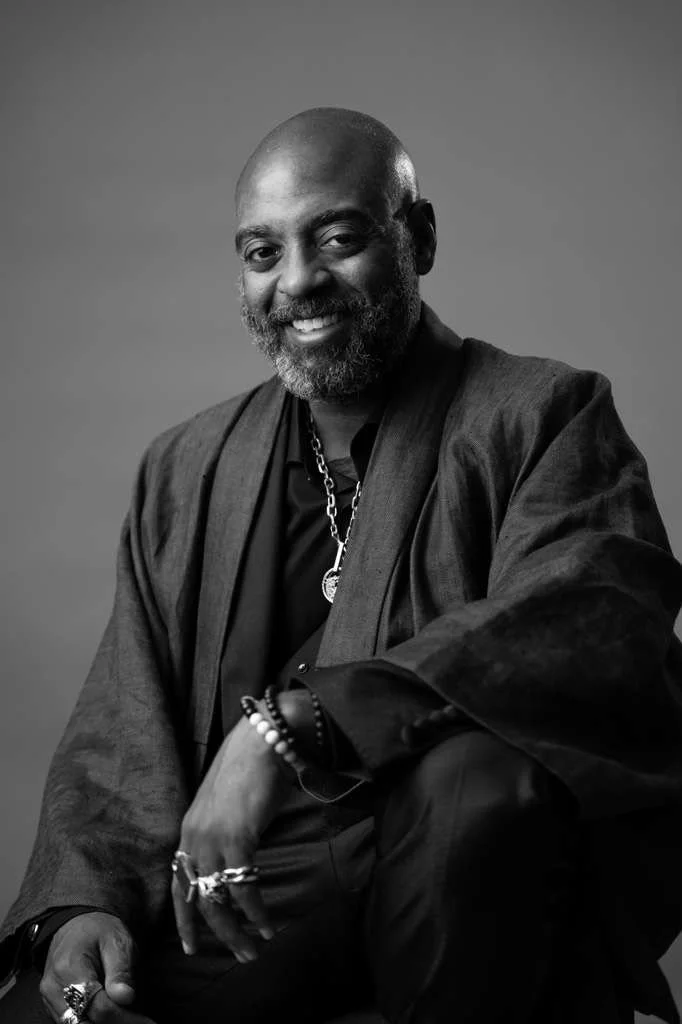
Reginald Dwayne Betts
“I have learned to weep in a world that rarely forgives weakness and falsely believes that weeping is for the weak. I believe in the wonderment of it all.”
“Few poets match Betts’s way with quotable rhetoric [or] good advice.… Balanced free verse—with echoes, at times, of Yusef Komunyakaa—prevails, with several ghazals thrown in: The demanding forms in Betts’s first books occur less often among these lanky meditations, where, perhaps, ‘the only curse is anger.’ Vigor and sharpness, however, seem to Betts far more than a curse: His symbols include not just dogs and basketballs, but—a warning? a vision of beauty? an erotic token?—the elegant butterfly knife called the balisong.”
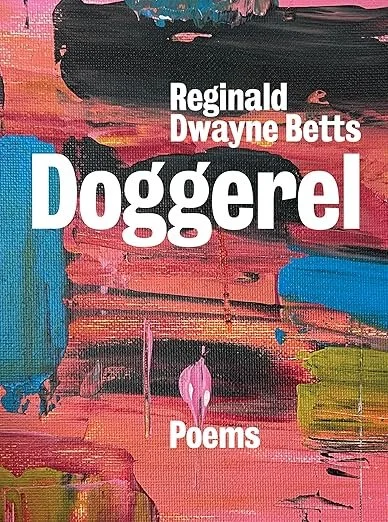
“Betts invokes canine friends as a powerful metaphor for the importance of life as an experience of collectivity. That he manages to execute this conceit without sacrificing any of his typical linguistic richness or thrilling intelligence only further proves that Betts is one of today’s finest poets.… A surprising but organic extension of Betts’s career-long preoccupations, offering an amiable entry point for new readers while retaining all of the conviction and mastery of language that makes each new collection a must-read.”
“Betts considers the pet dog, a cherished, always observant member of our world. By referencing the friendly and loyal attributes of the canine, Betts explores other, more serious subjects with gratitude and wonder.… Doggerel is a triumph of surprising moments and passionate reflections.”
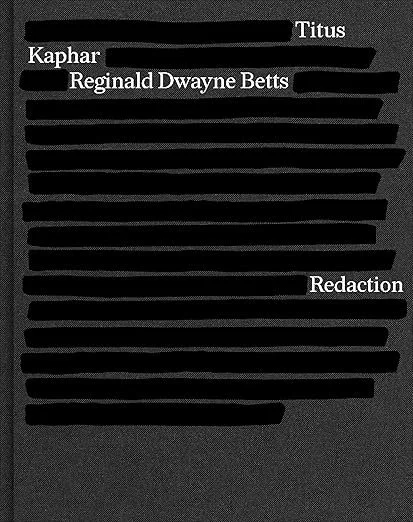
“In 2018, an old friend, the visual artist and filmmaker Titus Kaphar introduced me to a new one, the poet, memoirist, and attorney Reginald Dwayne Betts, over coffee at the Museum of Modern Art. In that first conversation together, we touched on art and poetry and work and life, and then they told me about a collaborative project on which they had begun work: a print portfolio, with images by Kaphar and poems by Betts, that would explore the criminal justice system’s multifarious failings, a central focus for both artists in their work and their lives, and the subject of intense public discussion and debate.”
“A searing volume by a poet whose work conveys “the visceral effect that prison has on identity.”
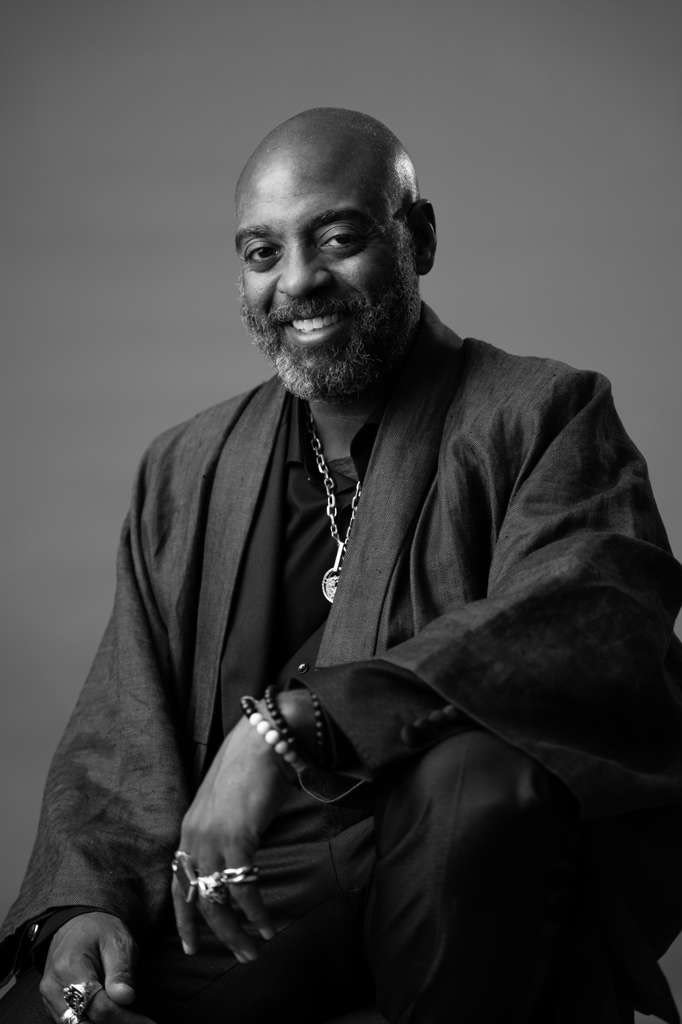
Reginald Dwayne Betts is a poet, a lawyer, and the founder and CEO of Freedom Reads.
At sixteen, he confessed to an armed carjacking and was sentenced to nine years in adult prison. He discovered poetry and the law in a cell, and those discoveries have shaped everything since. Across two decades, his work has been one long inquiry into how a sixteen-year-old ends up in prison and what it takes to come home—an inquiry he has pursued through poetry, memoir, theater, photography, printmaking, and film.
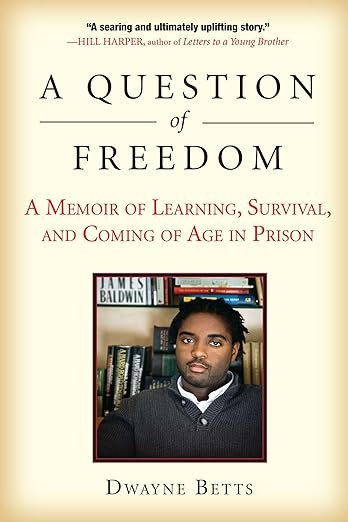
Betts is the author of six books, including the memoir A Question of Freedom, winner of an NAACP Image Award, and most recently Doggerel (W.W. Norton, 2025). A Question of Freedom is a prison memoir that begins with Betts's arrest and ends as he walks out of prison's gates. His forthcoming memoir, Off the Cuff, begins the day he was released and navigates his first twenty years out of prison.
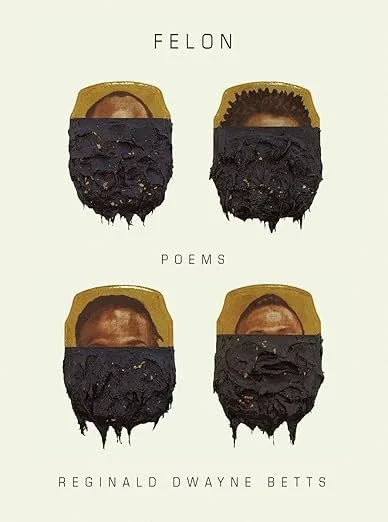
Out of a desire to connect more intimately with an audience, he created Felon: An American Washi Tale, a solo theater work made in collaboration with director Elise Thoron and a distinguished design team. The work transforms the story of what it means to be a felon into a meditation on what it means to be American. It has been performed in prisons and on major stages, including San Quentin and the Perelman Performing Arts Center. His exploration of these themes continues in the film March Forth, which premiered at the Tribeca Festival.
His visual art practice is an extension of his literary inquiry. While writing an essay about the poet and photographer Thomas Sayers Ellis, Betts began shooting black-and-white street photography, using the camera as a new lens on the world he has documented for years. As a printmaker, his collaboration with Titus Kaphar, Redaction, was exhibited at MoMA and acquired by Yale Law School. In a subsequent collaboration with Ruth Lingen, he transformed the clothing of friends serving lengthy prison sentences into handmade paper for prints now held in the collections of Brown University, the Morgan Library, and Smith College.
After law school, Betts began writing for The New York Times Magazine, where he has served as a poetry editor and a contributor exploring subjects ranging from Kamala Harris to Tariq Trotter. His essay “Getting Out,” an account of his journey from jail to Yale, won the 2019 National Magazine Award in Essays and Criticism. His most recent work, “A Gun Derailed My Childhood. As an Adult, I Found Relief at the Range,” continues a career-long examination of the impact of guns on the American landscape.
A 2021 MacArthur Fellow, Betts has held fellowships at Harvard's Radcliffe Institute, the Guggenheim Foundation, New America, and the Aspen Institute. He serves on Connecticut's Criminal Justice Commission and is an Associate Research Scholar at Yale Law School, where he earned his J.D.
Betts launched Freedom Reads with a $5.25 million grant from the Mellon Foundation. The organization is the only one in the country dedicated to opening libraries inside prison cellblocks. Each Freedom Library is handcrafted, often by people who have served time themselves, and placed within arm’s reach of the people it serves. Betts founded it on a simple conviction: freedom begins with a book.
“[Felon] shows how poems can be enlisted to radically disrupt narrative... Betts’s poems about fatherhood [are] some of the most powerful I’ve read... The black bars of redacted text [in the redaction poems], which usually suggest narrative withheld, here reveal its true contours... For Betts, the way to expression passes through such troubled silences.”
“Poet and memoirist Betts (Shahid Reads His Own Palm) presents elegy after elegy in a devastatingly beautiful collection that calls out to young black men lost to the pitfalls of urban America. ‘In the streets that grieve our silence, children die,/ they fall to bullets & asthma, they fall/ into each other’s arms as mothers watch on,’ he writes. Betts keeps his forms as tight as his turns of phrase….These poems are aimed at readers willing to be moved and to be schooled, who appreciate poetry’s ability to cull beauty and hope from despair and desolation: ‘They have known cells like rivers and brown and/ Black men returning to prison as if it’s/ The heaven God ejected them from.”
“Inside silence there is a sliver of light that is the seed of the music of these poems, the origin of a melodic range we seldom see in a poet’s first collection. These melodies move in a harmonic range affirming human struggle with an extraordinary elegance. This collection of song is definite evidence of the gift.”
“A Question of Freedom is a must-read and should be required reading for all those young sons and grandsons and brothers and nephews and uncles who believe this can’t happen to them; it can, even if they can’t wrap their brains around such a concept.”
Open and right-click to download
Book Jacket
Book Jacket
Book Jacket
Book Jacket
Book Jacket
Book Jacket