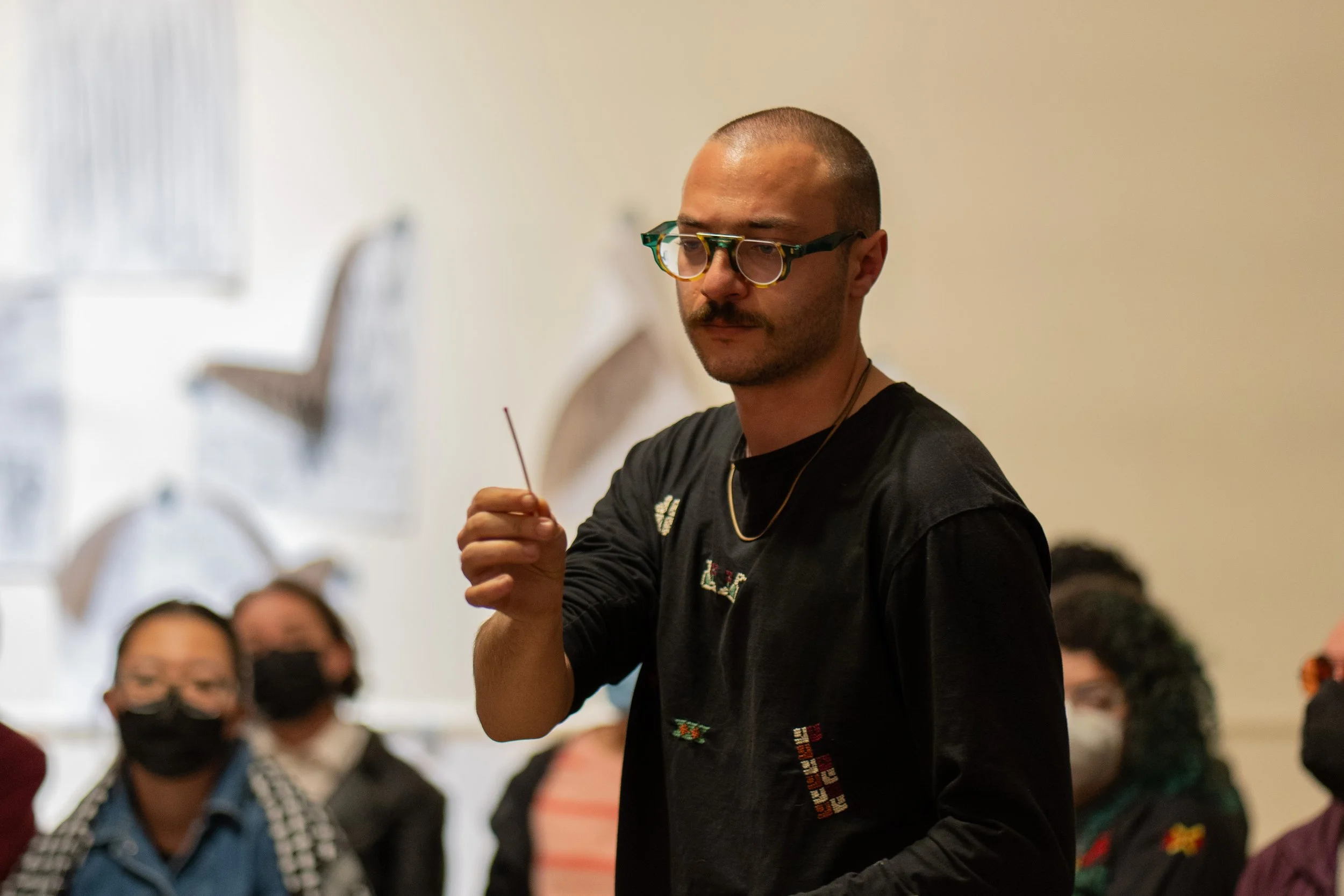
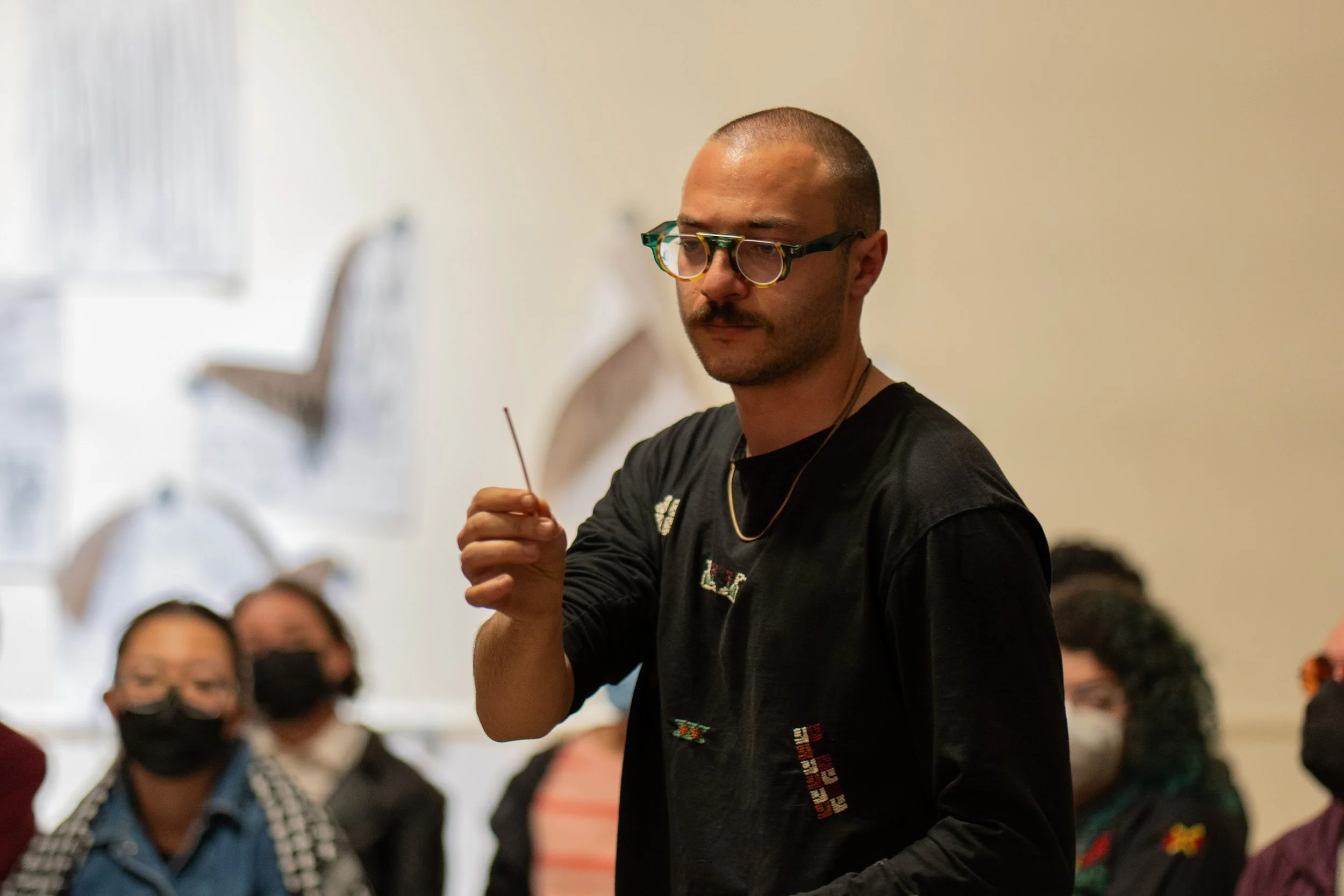
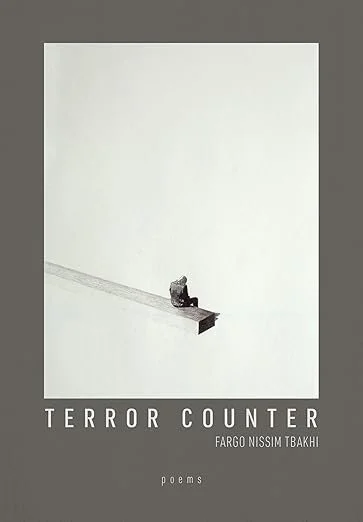
Fargo Nissim Tbakhi is a Palestinian performance artist and writer. His debut poetry collection, Terror Counter (Deep Vellum, 2025) was longlisted for the National Book Award. His next book, Antigone.Velocity. Salt., is forthcoming from Deep Vellum in 2027.
His writing has been published and anthologized widely, including in Mizna, Foglifter, the Academy of American Poets, the Best American Science Fiction and Fantasy, Strange Horizons, Protean, and elsewhere. His performance and installation work has been featured at the Center for Performance Research, Cannonball Festival, OUTsider Fest, Rhizome DC, the DC Palestinian Film and Arts Festival, the Washington Project for the Arts, Amherst College, Arizona State University, the Abrons Art Center, and elsewhere. He has received fellowships and support from Hamiltonian Artists, the DC Commission on the Arts and Humanities, the Poetry Project at St. Marks, the Arab-American National Museum, the Center for Imagination in the Borderlands, and elsewhere. He has taught in the Theater Department at Towson University, and has given lectures or workshops at a variety of institutional and independent educational forums.
His performance project in collaboration with George Abraham, EVE, received support from the National Performance Network and the MAP Fund, and will premiere in 2026 in partnership with the Arab American National Museum, Mizna, and Silk Road Cultural Center. With Mojdeh Rezaiepour, he is developing the Collaborative Fragment Library, a counter-institutional infrastructure for artists and communities to work with fragments of ancient heritage objects.
In an interview with Lauren Abunassar, Fargo describes one thing poetry offers him: “As much as I spend a lot of time in an intellectual space thinking about legacies and practices of Palestinian revolution and resistance and survival, my own personal experience of the world is filled with shame and despair and fear and loneliness. So I think sometimes there are the spaces of intellectual and political commitment and of personal, vulnerable experience, and we have to choose one over the other… It’s not good organizing rhetoric to say, ‘I don’t know if we will win. I don’t feel it day to day.’ On the other hand, it not useful to just sink into these feelings of despair and shame. So to me… one thing poetry can do is be a space where we can articulate all these things that we feel while we are also doing the other thing. Poetry is not just constant misery or constant revolutionary fervor. It’s all of these things that are in between that make us people that live in the world.”
He lives in Washington, DC.