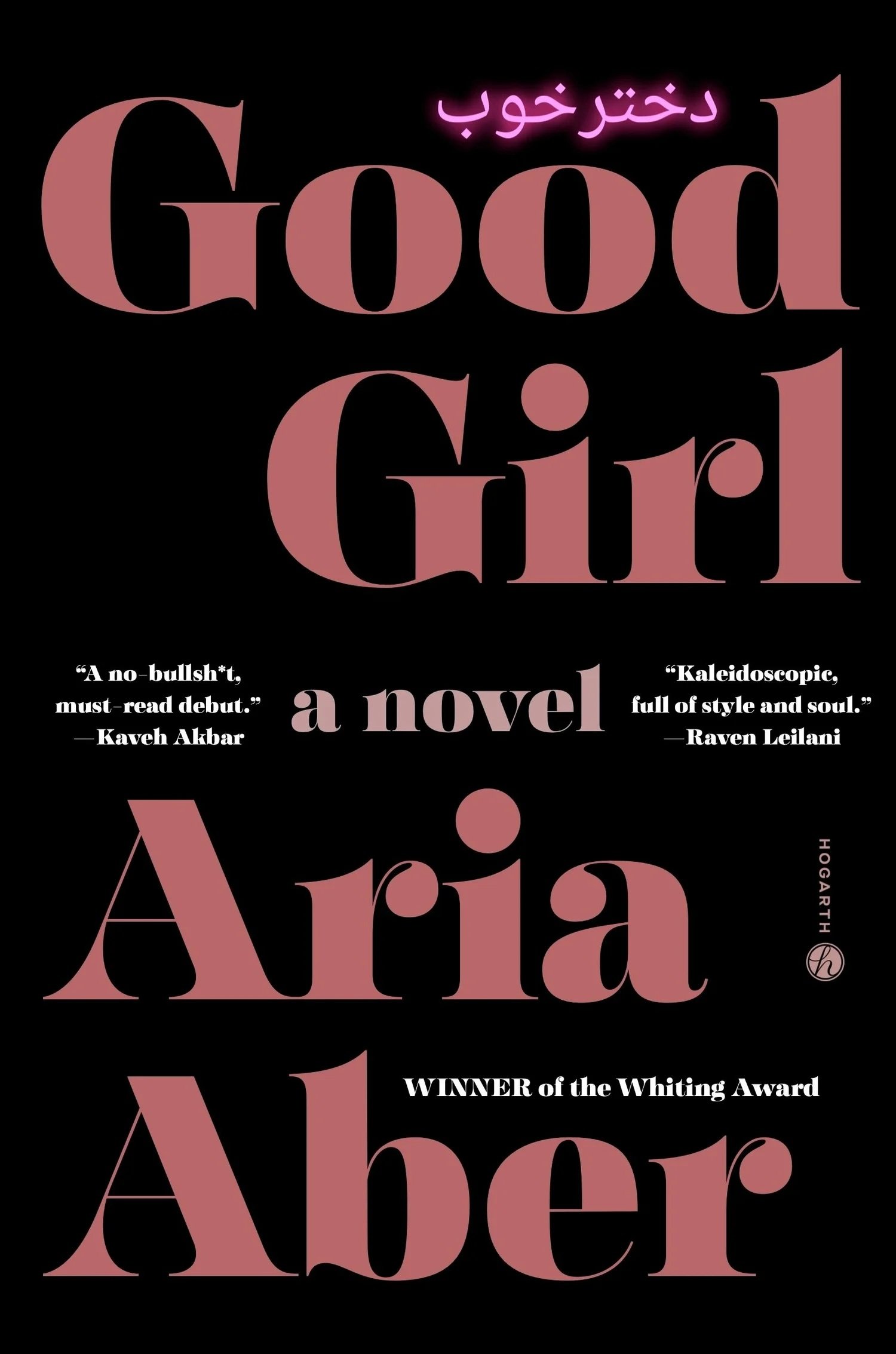
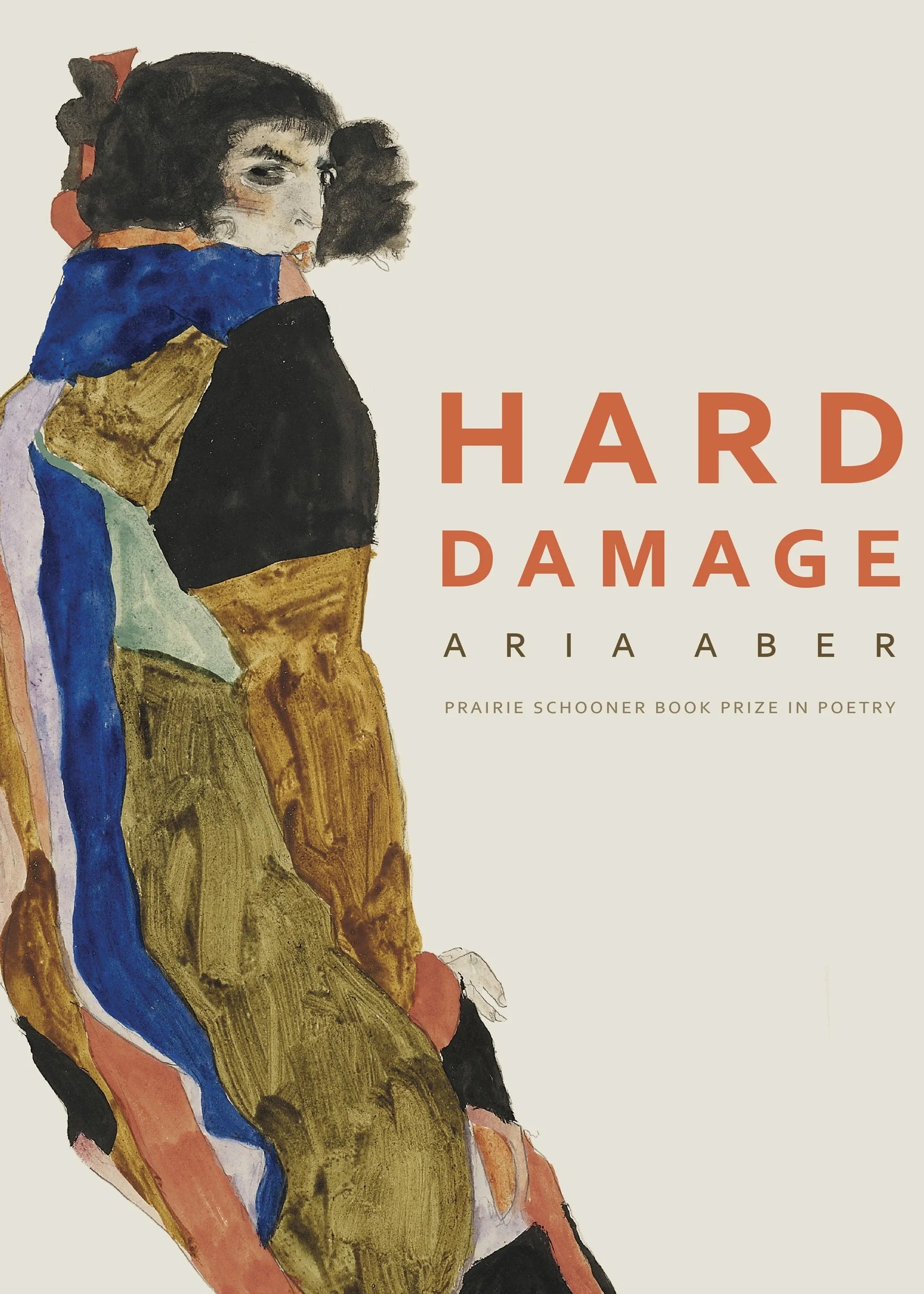
Aria Aber was born and raised in Germany and now lives in the United States. Her most recent book is the novel Good Girl (Hogarth/Bloomsbury UK, 2025), a finalist for the Women’s Prize. It has appeared in German, French, Italian, Spanish, Portuguese, Swedish, Japanese, and Turkish editions. Her debut poetry collection, Hard Damage (University of Nebraska Press, 2019), won the Prairie Schooner Book Prize and the Whiting Award. She is a former Wallace Stegner Fellow at Stanford and graduate student at USC, and her writing has appeared in The New Yorker, New Republic, The Yale Review, Granta, and elsewhere.
In an interview with the Women’s Prize, she asked how poetry informed her prose while writing Good Girl. She responded: “To be honest, I had to activate a completely different part of my brain to write this novel, because I was intent on writing a story with at least a little bit of a plot, with a narrative, and a moment of change both for Nila and the other characters around her. In this book, the larger story of Nila’s journey is as important as the smaller, more concentrated element of the image. And yet, on a more granular basis, the language, including so many of the imagistic descriptions… are a testament to my training as a poet. I’m always thinking of a particular craft element Eduardo C. Corral once discussed in an interview about his poetry: that he unlocked the real potential for the lyric once he moved away from fact and towards the music of the line. On a sentence level, I am always guided by the music; I think of sound first, while logic becomes more important during the revision stage.”
She serves as the poetry editor of Kismet and as a contributing editor at The Yale Review, and works as an Assistant Professor of Creative Writing at the University of Vermont. Aber divides her time between Vermont and Brooklyn.