Master Class: The Scene and the Summary: How to Write Effective Scenes in Memoir and Personal Essay with David McLoghlin
Master Class: The Scene and the Summary: How to Write Effective Scenes in Memoir and Personal Essay with David McLoghlin
2 Sessions: Saturday, June 20 + 27
11:00am-1:00pm ET
David McLoghlin
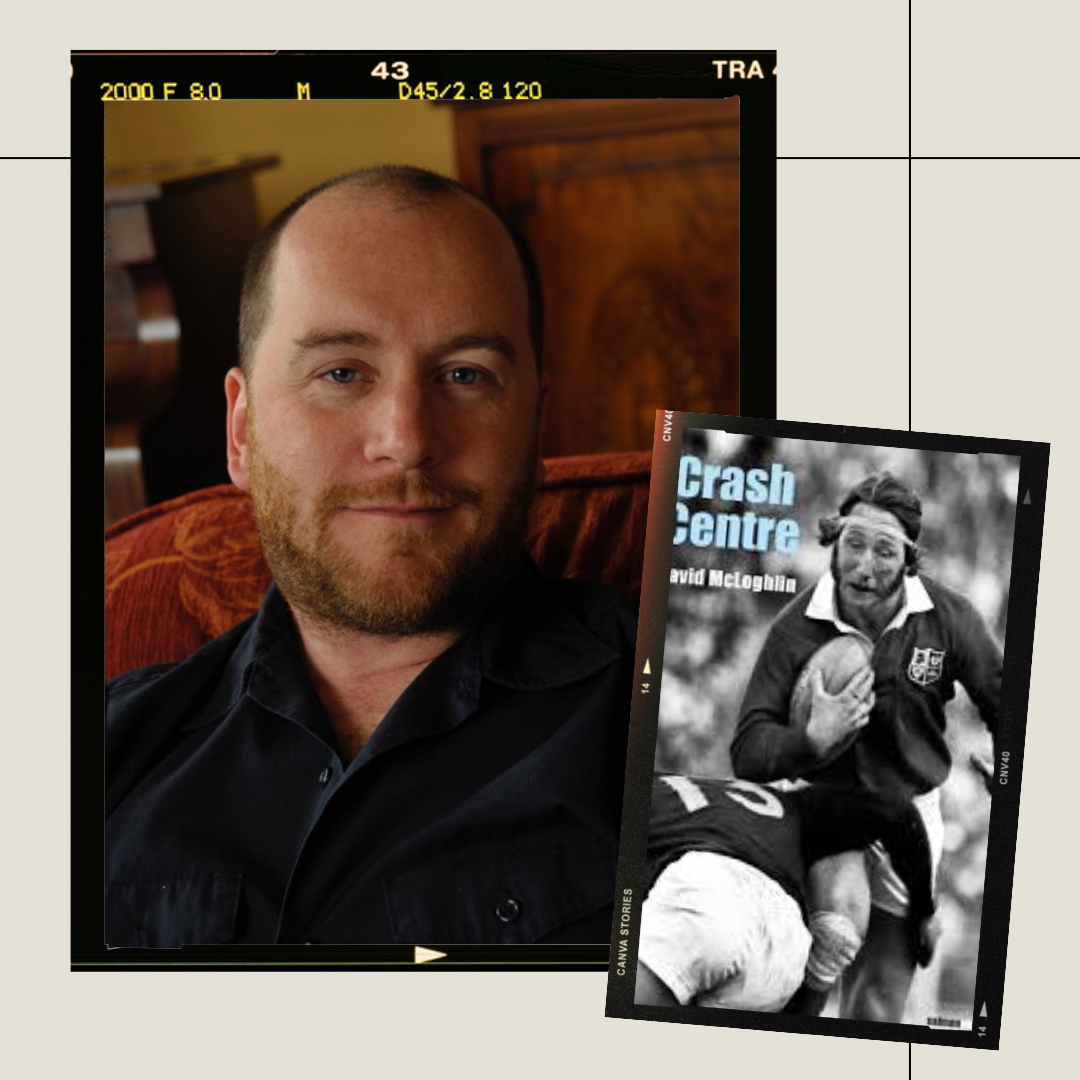
David McLoghlin is a prize-winning poet, and a writer of memoir plus and personal essay. His third book, Crash Centre (2024), was recently shortlisted for Ireland's Pigott Prize, Ireland's most valuable poetry prize. He was awarded a Literature Bursary (grant) for memoir by Ireland’s Arts Council, has an immersive essay forthcoming in Golfer’s Journal, and a personal essay has recently been published on the Poetry Foundation’s website. He is working on an immersive work of memoir plus about the legacy of his grandfather, Eddie Hackett, "the father of Irish golf design," and the journey into Irish golf of a complete novice.
We have an instinctive sense that time slows in scenes, giving us immersive sensory detail, conflict and dialogue, but what about exposition (also known as reflection, “glide,” or summary)? In fact, exposition is just as important as scenes, as it’s where the writer explains, and comments on scenes. Here is where the writer provides essential information that moves the story forward and links scenes together. Scenes are where we “show,” whereas in summary, we “tell.” Both are essential. Learning how to identify your principle story points (or scenes) will help you to structure your story. As you develop and improve your scenes, you will also develop a better sense of what they mean for you, and how to link them together. This knowledge in turn will help you to develop and improve your narrative voice, which is what well-employed exposition does. Scenes often tell the core story of the past, whereas exposition is in the voice of the adult narrator located in the “narrative present,” reflecting on the past.
This masterclass is structured around reading short extracts from memoir and personal essay; practical tips for how to execute scenes and summary in our own work; and, in-class writing exercises to improve our own craft learnings. Students will have ample opportunity to practice what they are learning. This class is for all levels. While attendees may be at the beginning or end of a project, all that is required is an interest in writing memoir or personal essay.
Workshop Highlights:
You’ll learn to identify scenes and summary (exposition) as you read the work of others as well as your own writing
You’ll learn how to write better scenes and summaries
As a result you will get a better sense of the story you are trying to tell, which will help you improve your narrative voice as a whole.
This class has one full scholarship and two partial scholarships available. To apply, please fill out this form by Friday, June 12.
David McLoghlin is a prize-winning poet and creative writing facilitator in memoir and poetry whose writing has been broadcast on WYNC’s Radiolab, appeared in film and published in journals of note on both sides of the Atlantic such as Poetry Foundation, Literary Hub, The Stinging Fly, Magma, Poetry Ireland Review, and many more. His three books are Crash Centre (May 2024), shortlisted for the 2025 Pigott Poetry Prize in association with Listowel Writers’ Week, Waiting for Saint Brendan and Other Poems (2012), and Santiago Sketches (2017), all with Salmon Poetry. Pamphlets / chapbooks include Suns (Cardboard House Press, 2017) and The Magic Door (Blue Canary Press, Milwaukee, 1993).
In 2025 he was awared an Arts Council Literary Bursary. In 2023 he received a Patrick and Katherine Kavanagh Fellowship and was one of two poets to represent Ireland on the Versopolis European poetry platform. He won the Open category of the Voices of War International Poetry Competition in 2018 and was a finalist in the 2015 Ballymaloe International Poetry Prize (now The Moth International Poetry Prize). In 2008, he received second prize in The Patrick Kavanagh Awards, and in 2006 received a major Arts Council / An Chomhairle Ealaíon Literature Bursary.