The Work Room
Online Workshops, Craft Seminars, + Manuscript Consultations
A program of The Shipman Agency
Please note: For questions regarding Work Room classes, please contact Kate Mabus, kate@theshipmanagency.com
Faculty: John Manuel Arias, Lillian-Yvonne Bertram, Fatima Bhutto, Sumita Chakraborty, Kavita Das, Jaquira Díaz, Edgar Gomez, Garth Greenwell, Maria Dahvana Headley, Jennifer Michael Hecht, Patricia Spears Jones, Joseph Keckler, Porochista Khakpour, Stephen Kuusisto, Dorothea Lasky, Greg Mania, Megan Milks, An Xiao (Ana) Mina, Jamie Quatro, Khadijah Queen, Danniel Schoonebeek, David Shields, Javier Sinay, Rob Spillman, Meredith Talusan, David L. Ulin, Nikki Wallschlaeger, Jen Winston
The Work Room was created in response to the pandemic. It has been so successful it is now a permanent feature of The Shipman Agency’s offerings. Here you will find opportunities to deepen your craft or get your manuscript in shape while studying with some of the world’s leading authors, many of whom offer classes exclusively through The Work Room. Students receive a graduate level experience that will challenge their assumptions and broaden the scope of what their work can do.
All workshops and seminars will be hosted on The Shipman Agency’s Zoom account. For manuscript consultations, you’ll communicate directly with the author. Craft Seminars + Master Classes generally have open enrollment. Workshops have capped enrollment.
Information on how to access classes will be sent 2 days prior to the start date. All classes are recorded. If you want to attend but the time zone doesn’t work for you, register for the class and email Kate Mabus, kate@theshipmanagency.com to let her know you’ll need the recording. She’ll send you a password protected link that will be good for one week. Recordings will be viewable for 4 weeks after the class date.
A portion of all Work Room proceeds will be donated to ACLU Drag Defense Fund
Books by Work Room faculty, and new and forthcoming books from our clients, are available on our affiliate page at Bookshop.org.
ALL GENRES
1 Session: Thursday, October 8
6:00-8:00pm ET
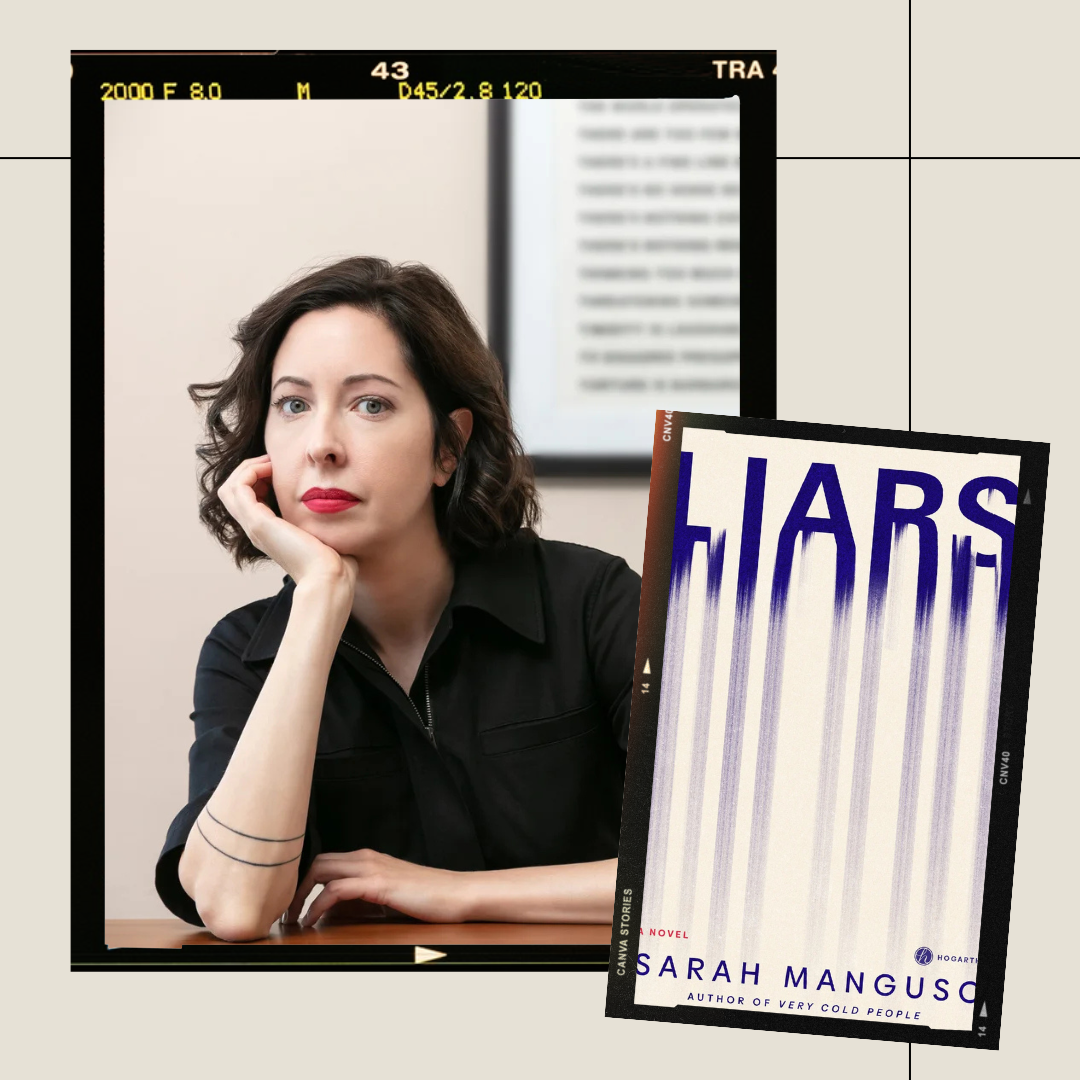
Sarah Manguso
NOTE: This class is full.
Sarah Manguso is the author of many books of fiction, nonfiction, and poetry, including the novels Liars and Very Cold People and the nonfiction books Ongoingness and The Two Kinds of Decay. Her honors include an American Academy of Arts and Letters Literature Fellowship, a Hodder Fellowship, a Guggenheim Fellowship, and the Rome Prize. Her work has been translated into sixteen languages.
What if I told you that you already know the solution to your biggest creative block? During this master class, I'll present a six-part creative unblocking exercise that I’ve taught at writing programs and arts organizations across the country. This exercise can be used or reused at ANY phase of ANY type of creative work… and you might find that it's the only writing exercise you'll ever need.
Highlights:
Reconceive the idea of writer's block
Relearn how to solve it
Learn from the experience of others with similar challenges
This class has 2 partial scholarships available. To apply, please fill out this form by Wednesday, September 30.
1 Session: Saturday, October 24
1:00-3:00pm ET
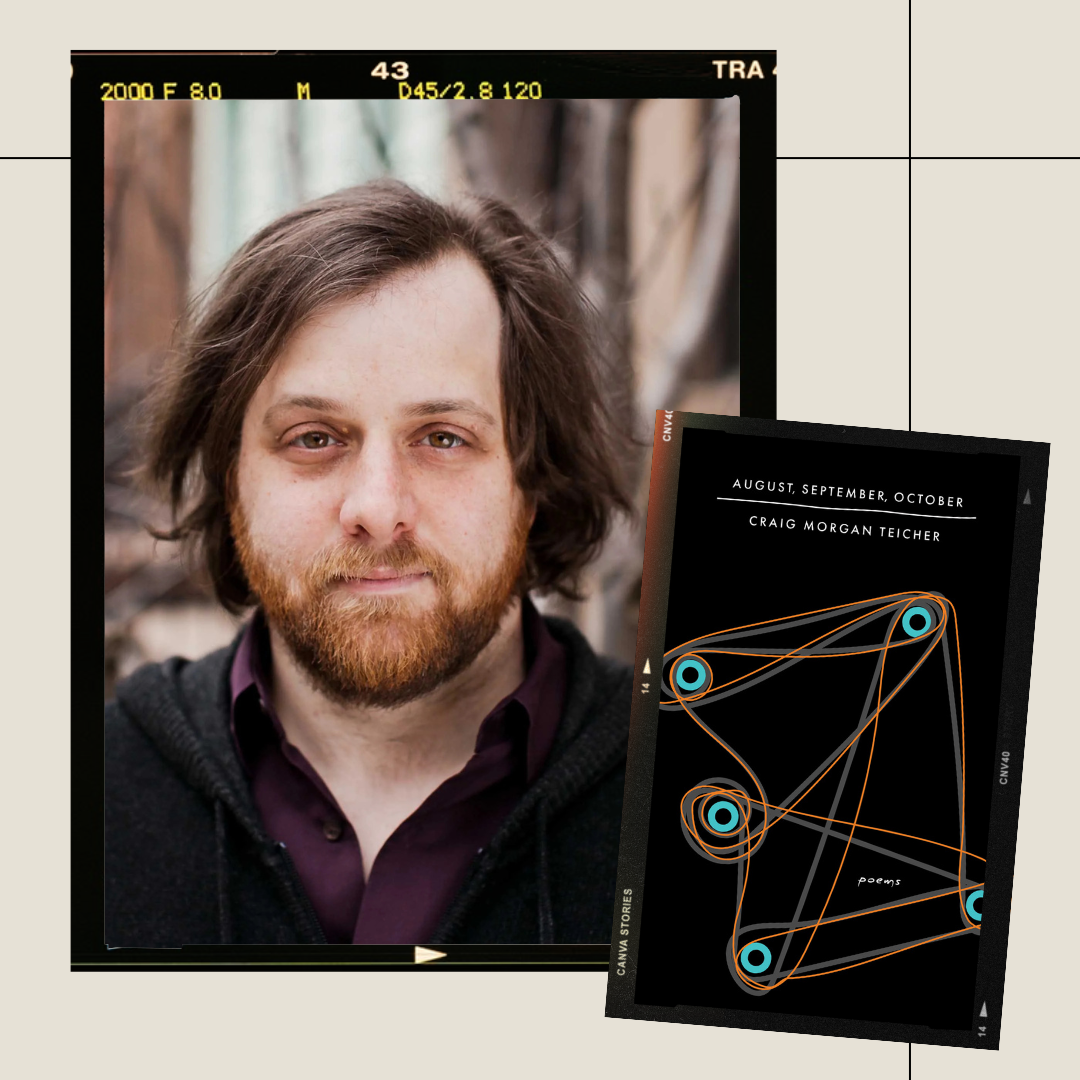
Craig Morgan Teicher
This class will be taught by Craig Morgan Teicher, author of Cradle Book: Stories and Fables (BOA, 2010) and five books of poems—August, September, October (BOA, 2026); Welcome to Sonnetville, New Jersey (BOA, 2021), which won the Paterson Poetry Prize; The Trembling Answers (BOA, 2017), which won the 2015 Lenore Marshall Poetry Prize from the Academy of American Poets; To Keep Love Blurry (BOA, 2012); and Brenda Is in the Room and Other Poems (CLP, 2007), winner of the Colorado Prize for Poetry. His collection of essays, We Begin in Gladness: How Poets Progress, was published by Graywolf in 2018.
The poet Richard Howard had a wonderful maxim that has always helped me understand the difference between prose and poetry: “Verse reverses, prose proceeds.” What do we do when we get to the end of a poem? Read it again, because the last words shoot a bolt of electricity up through the poem, altering the meanings of all the words that came before—this is verse reversing. Prose, however, without line breaks and with only paragraphs to guide our eyes, proceeds: it wants to tell us what happens next, to wind its way down page after page.
But sometimes prose reverses. When it does, we get some of literature’s most exciting and enduring forms: fables, prose poems, and, more recently, flash fiction, which encourage imagination and whimsy as they push against the boundaries that hold distinct kinds of writing in place. In this one day craft seminar, students will discuss short pieces by a number of exemplary writers—Franz Kafka, Ross Gay, Lydia Davis, Rita Dove, and Russell Edson, among others—and experiment with generative exercises to write their own short-form pieces. Writers of both prose and poetry are welcome and encouraged to attend.
Students Will:
Familiarize themselves with forms that straddle prose and poetry
Explore how these forms draw on other kinds of writing—journalism, instructions, reports
Experiment with writing prompts and in-class exercises
This class has 1 full scholarship available. To apply, please fill out this form by Wednesday, October 14.
1 Session: Sunday, October 25
11:00am-1:00pm ET
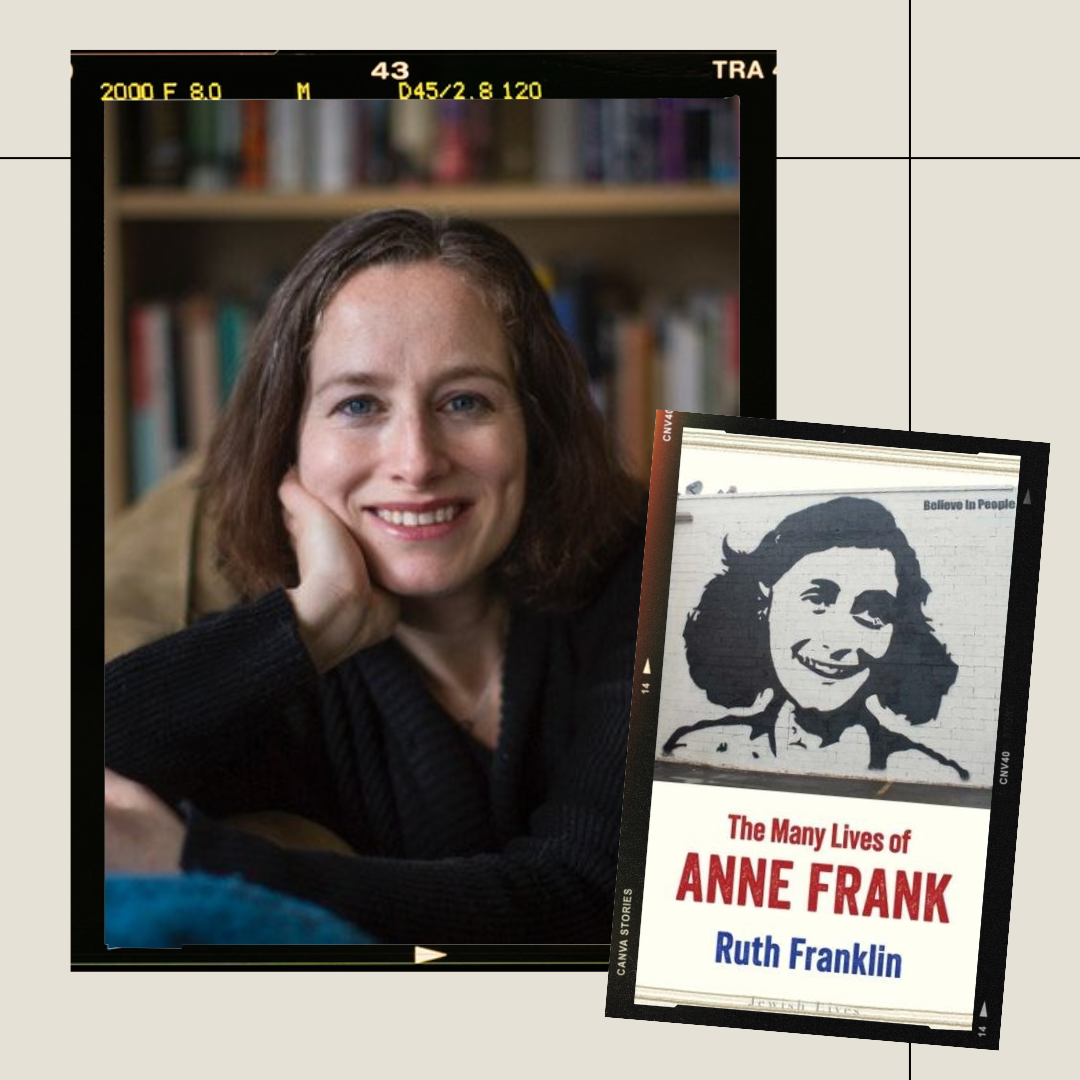
Ruth Franklin
Ruth Franklin has been writing criticism for The New Yorker, Harper's, The New York Review of Books, and other publications for more than 20 years. She teaches nonfiction writing at Columbia School of the Arts and the Jewish Theological Seminary.
We’ve all finished a book, walked out of a movie, or wrapped up a series and immediately thought, “I have some thoughts on that.” But turning those raw opinions into a sharp, propulsive piece of writing that readers love—and editors actually want to buy—is its own craft.
In this craft seminar, longtime critic Ruth Franklin takes you on a deep dive into the practical mechanics of criticism. We’ll break down the anatomy of a brilliant review, learn how to weave in deep analysis without getting trapped in plot summary, and discuss how to pitch editors with an angle that ties into the current cultural moment. Whether you want to write for legacy publications, elevate your newsletter, or just build a more authoritative voice, this workshop will give you the tools you need.
Highlights:
Sharpen your critical voice
Understand the mechanics of criticism
Learn how to pitch editors
To apply for a scholarship, please fill out this form by Friday, October 17.
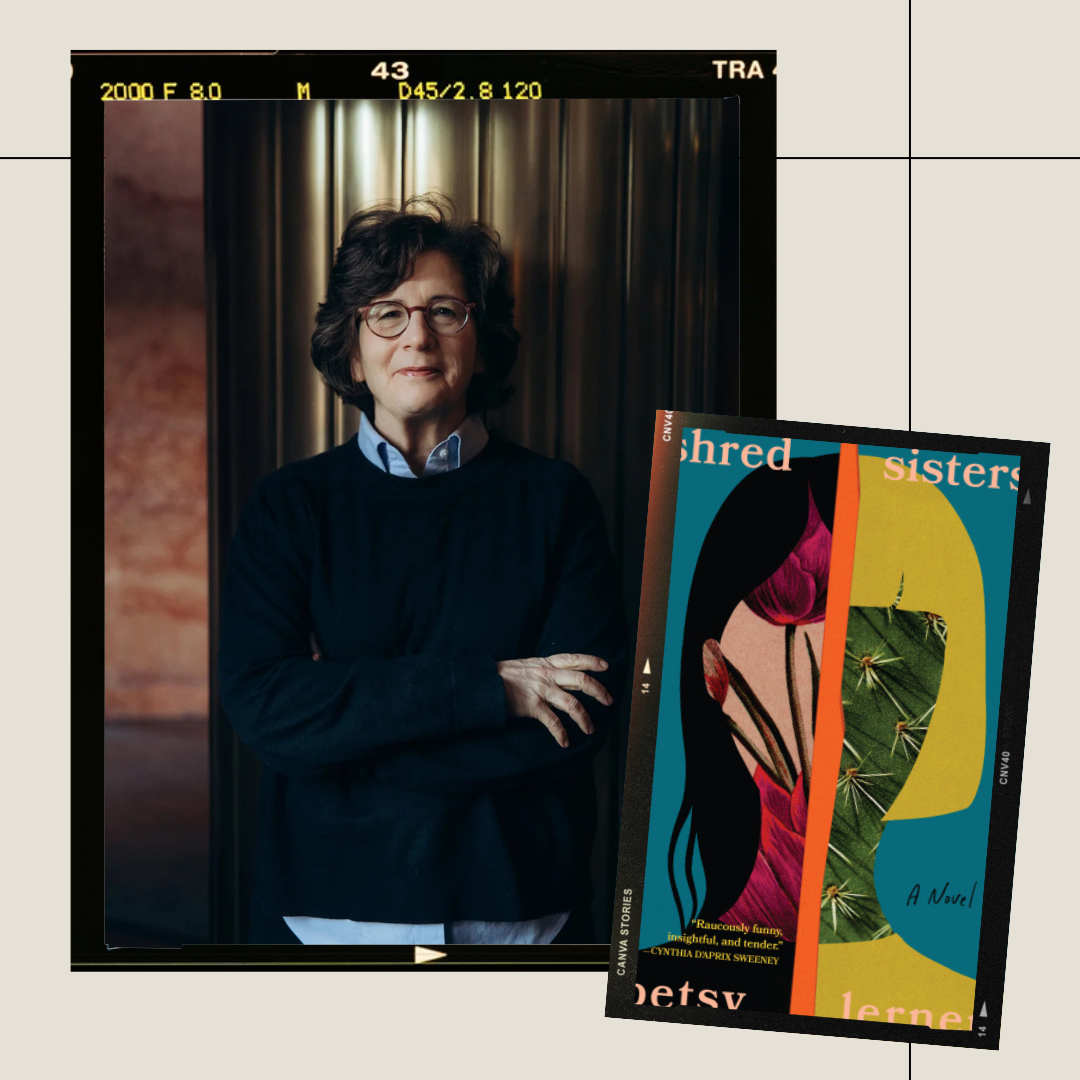
4 Sessions: Mondays, November 2-23
plus an individualized meeting
6:30-8:30pm ET
Betsy Lerner
I am a partner at a literary agency with 24 years of agenting experience and was formerly an editor at four major trade houses for 16 years. I have an MFA from Columbia University and I am also the author of four books including The Forest for the Trees: An Editor's Advice to Writers, as well as a blogger on the publishing life and TikTok content creator. If you have a draft or proposal for a full-length project, we will workshop twenty pages and customize feedback to help you get to the next stage. This is a hands-on immersive workshop where we all work together to sharpen our work. Participants will be expected to read everyone's pages ahead of each session. Be prepared to contribute!
In my experience, most writers have their work rejected for one reason: it wasn't ready to be submitted. The goal is to make your project as bullet-proof as possible. That means: a great title, a great opening chapter, a solid pitch, an effective query letter, building your profile, and of course most important polishing your prose. We will workshop twenty pages of each participant's work with an eye toward honing every aspect. I find a lot of rookie mistakes can be dealt with quickly. We'll try to get the deeper questions of revision and how to submit the best possible draft.
Highlights:
Tips, tricks, and tools of the trade for revision - being your own best editor
Tips for query letters, titles, and putting together a sellable project
Community - this might a place where you find your ideal reader or at the very least enjoy the company of writers on the same path
This class has 1 full scholarship available. To apply, please fill out this form by Sunday, October 25.
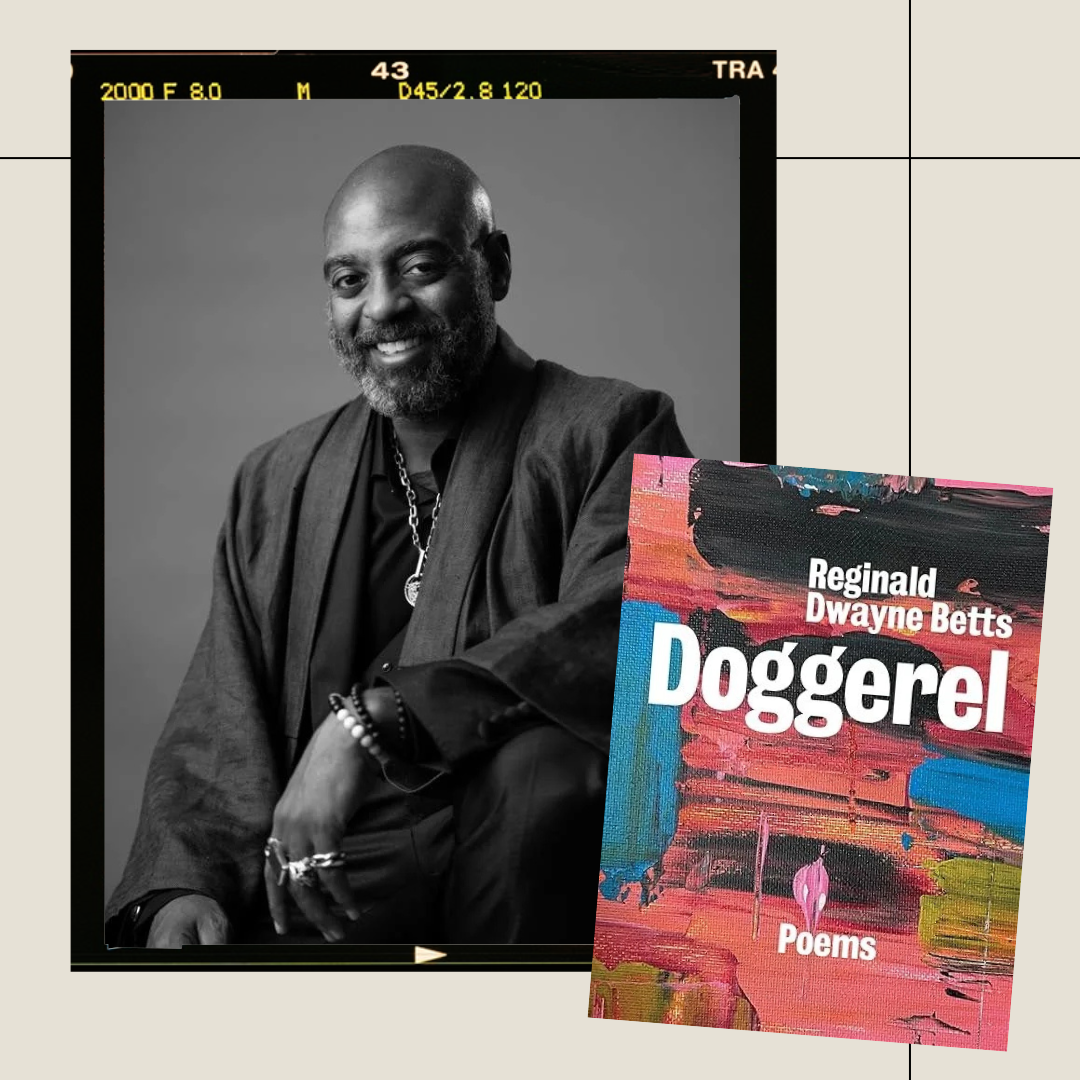
2 Sessions: Saturday + Sunday, November 7 - 8
1:00-3:00pm ET
Reginald Dwayne Betts
Reginald Dwayne Betts is a poet, a lawyer, and the founder and CEO of Freedom Reads. He is the author of Doggerel, Felon, and a few others across different genres, with books in poetry, essays, criticism, a one-person theatrical piece. He has written for the New York Times for nearly ten years.
Every poem is a series of refusals. The haiku refuses everything past three short lines. The villanelle refuses to let go of its two refrains. The triolet, the canzone, the ghazal — forms most of us were never taught — govern more severely, dictating what must repeat, when, and how. This seminar begins with a counterintuitive claim: these constraints, these commitments to not make certain choices, don't narrow what's possible on the page. They reveal possibilities that unconstrained writing forecloses. When you can't say some thing, you discover what you must say. We'll study how this works in forms familiar and strange, reading poems that turn their formal obligations into their deepest sources of surprise.
Then we'll push the theory further than poetry usually lets it go. A form governs six lines, or twelve, or a few hundred — but what happens when constraint is spun out over a 2,500-word essay, or sustained across a 75,000-word book? We'll look at how the discipline of the poetic line scales into the architecture of longer work, how a refusal made on page one can organize everything that follows. You'll leave with a theory of why constraint generates rather than restricts, and a set of practices for building constraints into your own poetry or prose.
Highlights:
A working theory of constraint — understanding what unconstrained writing forecloses and how form leads to an unpredictable (and much needed) freedom in poetry and prose.
Close study of forms familiar and strange — how poetic forms (the villanelle, triolet, canzone, and ghazal) turn their formal obligations into their deepest sources of surprise.
Practices for scaling constraint beyond the poem — concrete strategies for spinning the discipline of the poetic line into essays and book-length work, so a refusal made on page one organizes everything that follows.
This class has 2 scholarships available. To apply, please fill out this form by Sunday, November 1.
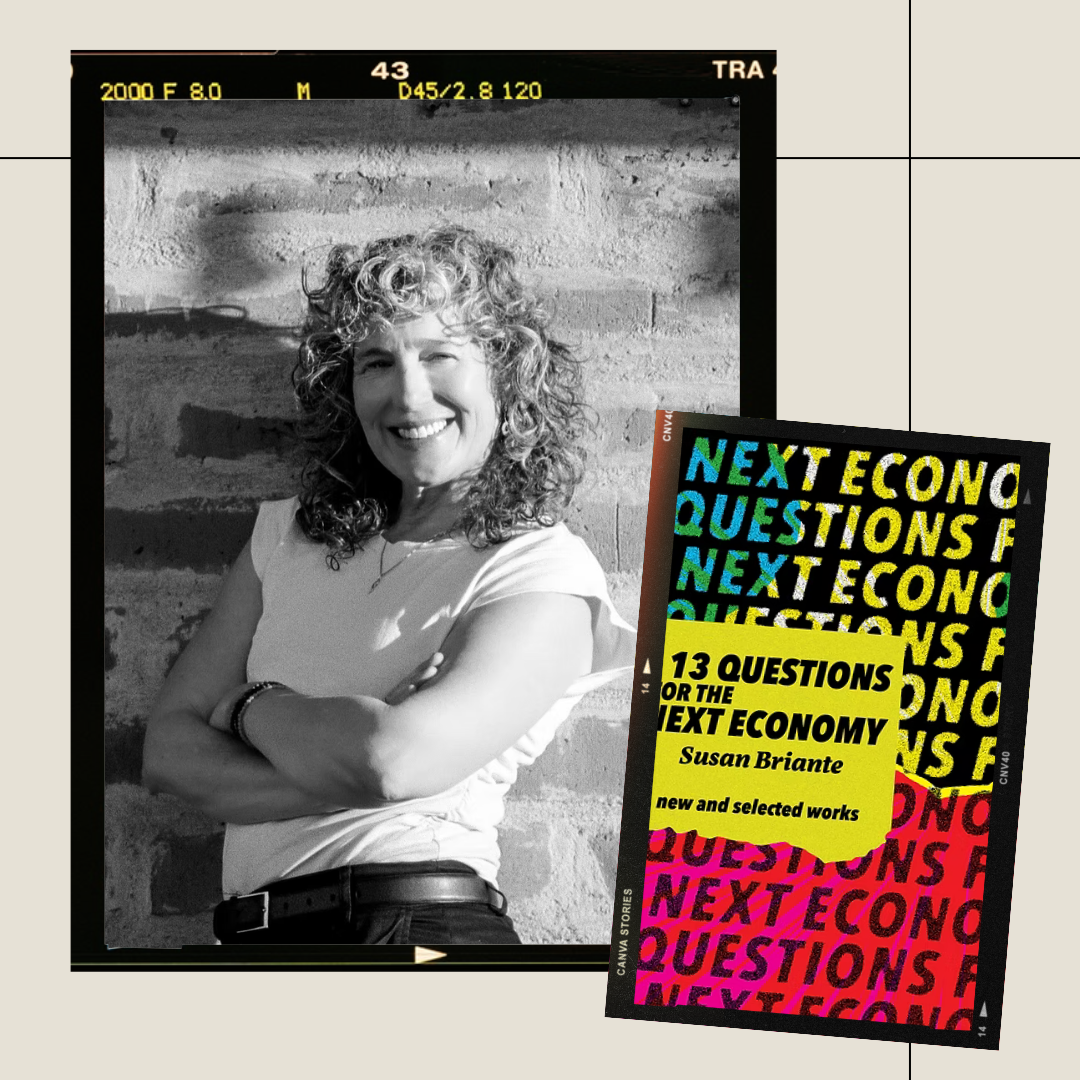
2 Sessions: Thursdays, November 12 + 19
7:00-8:30pm ET
Susan Briante
Explore how your writing can respond to crisis with award-winning poet and essayist Susan Briante. Her most recent collection, 13 Questions for the Next Economy: New and Selected Works, is a finalist for the CLMP’s Firecracker Award in Poetry. Her book Defacing the Monument, essays on immigration, archives, aesthetics and the state, won the Poetry Foundation’s Pegasus Award for Poetry Criticism in 2021. She teaches in the MFA program at the University of Arizona, where she directs the Southwest Field Studies in Writing Program bringing students to the US-Mexico border to collaborate with community partners.
In a time of climate catastrophe, conflict, and economic precarity, writers turn to the page to document and process, to know what the poet Muriel Rukeyser described as “people today and the web in which they, suffering, find themselves.” How can we do justice to a wide range of injustices we might want to confront on the page? How can we respond to crisis without creating a spectacle of our own or another’s suffering?
In this two-session class, we’ll read the work of writers (including Rukeyser and contemporary authors such as Layli Long Soldier, M. NourbeSe Philip, and Alexis Pauline Gumbs) who have confronted past traumas and current challenges using different approaches and genres. We’ll consider the ethics of writing out of and through crisis as firsthand witnesses or researchers. We’ll interrogate our own goals, positions, and perspectives on the issues we want to address. Then we’ll craft a plan for moving forward with our projects across whatever genre we choose to write in.
Highlights:
Exploration of various approaches to writing through historical injustices, trauma, and crisis
Generative exercises to allow us to experiment with different craft tools and modes
Reflections to help us clarify and plan our writing goals
This class has 1 full and 1 partial scholarship available. To apply, please fill out this form by Sunday, November 1.

1 Sessions: Saturday, November 7
2:00-5:00pm ET
Lidia Yuknavitch
Lidia Yuknavitch is a highly acclaimed, nationally bestselling author of memoir, fiction, and nonfiction. Her most recent book is the memoir Reading the Waves (Riverhead, 2025), which was praised by Booklist as “emotional and darkly hilarious,” and as "electrifying" by Suleika Jaouad. Her memoir The Chronology of Water has been adapted into a feature film by the actress Kristen Stewart. She is a practicing/publishing writer, a teacher/facilitator, and an arts advocate, who founded Corporeal Writing. She has published 14 books, taught in academia for 30 years, then exited.
"Arrange whatever pieces come your way" is a quote from Virginia Woolf. She was describing how one might find and arrange meaning from disparate, small, or seemingly unimportant "pieces" of experience. As anyone has ever witnessed in her work, rather than linearity, she created patterns where stories emerged from kaleidoscopic turns.
In this creative lab we will generate narrative fragments
(fiction, nonfiction, poetic, doesn't matter) and explore different modes of arrangement to yield stories. In particular, we will look at examples of as well as create diptychs, triptychs, and a narrative braids.
Participants will leave the creative lab with draft material for further development, possibly (it happens!) juicy completed works, and even material that could inject vibrancy back into dormant or stuck work.
Highlights:
Participants will emerge with the makings of both a diptych/triptych as well as a narrative braid (fiction, nonfiction, poetry, hybrid…doesn’t matter)
We will have fun playing, working, sharing collaboratively in creative process together
To apply for a scholarship, please fill out this form by Friday, October 30.
Fiction

1 Session: Tuesday, November 10
6:00-8:00pm ET
Michael Zapata
This master class is taught by award winning novelist and editor Michael Zapata, author of The Lost Book of Adana Moreau, Best Book of the Year for NPR, the A.V. Club, Los Angeles Public Library, among others. He is the recipient of the Meier Foundation Artist Achievement Award and the DAG Prize for Literature. In Axios, Michael Zapata’s novel The Lost Book of Adana Moreau was called a “crucial work in the growing Latinofuturism movement.”
To research for a novel, Michael Zapata traveled to the Amazon rainforests in Brazil to shadow the work of entomologists. What followed was a deep dive inquiry not only into the strange and complex lives of ants, but also into the lives of indigenous scientists, revolutionaries, the mysteries of literary craft, and the writers of Latin America. In this master class, Michael Zapata will guide writers through the critical and magical practice of real-world research that both layers fiction writing and takes advantage of the wonderful discoveries and possibilities that research itself contains. The class will also include a Q&A.
Highlights:
Learn strategies for researching fiction: how to build your research plan; where to begin and end; how to organize your material.
Students will walk away with a greater understanding of how to implement research methods and techniques into their own work.
Advice on how to research in the world at large, including interviews, collecting material, and even travel.
This class has 1 full scholarship available. To apply, please fill out this form by Sunday, November 1.
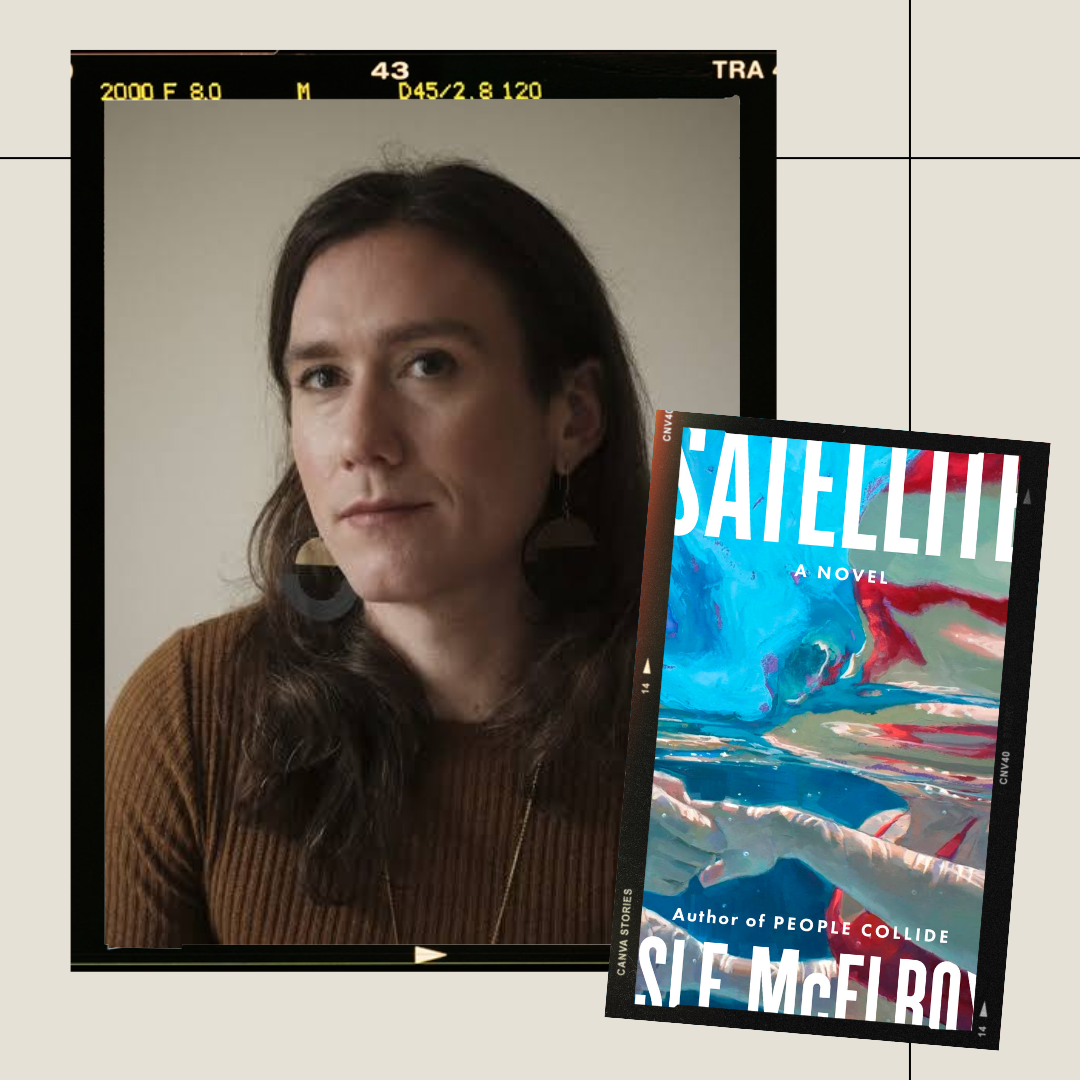
1 Session: Monday, November 16
6:00-9:00 pm ET
Isle McElroy
Isle McElroy is the author of three novels: The Atmospherians, People Collide, and the forthcoming Satellite. They were a 2025 Shearing Fellow at the Black Mountain Institute and were named a 2026 National Magazine Finalist in criticism. Their writing appears in The New York Times, The Cut, Vulture, The Atlantic, The Believer, and elsewhere.
What would happen to your story if your main character died? Would life continue without them? If not, you likely haven’t done enough to create a rich, believable world.
In this class, we will discuss the importance of world in fiction. World is not just setting, it’s everything that makes up the universe within and beyond the primary focus of your story. We will explore strategies for enhancing the world of your fiction. How do you create conflict in the background of your novel or story? How do you set actions in motion that will later shape your main characters’ lives? This kind of world-building is important across genres: from literary realism to speculative romance. Creating a lively, functioning world is difficult but necessary to good fiction. It’s the difference between flat, forgettable storytelling and a rich, three-dimensional narrative that exists as its own separate universe. It’s the difference between a manuscript in a drawer and a book on display in a window.
Highlights:
Learn the difference between world and setting.
Receive verbal feedback on in-progress writing.
Learn strategies for how to enhance the world of your fiction.
Pre-order Scholarship: Anyone who pre-orders Isle McElroy's forthcoming novel Satellite (March 2027) can enroll in the class for only $50. To be approved for a scholarship, you will need to provide a copy of your pre-order receipt that includes your name and make the $50 payment under the same name through our payment portal by Sunday, November 15.
Directions:
Pre-order a hardcover copy of Satellite. Here is the link to pre-order: https://bookshop.org/a/83395/9798217378913
Upload an image of your receipt to our application form. Here is the link to the form: https://docs.google.com/forms/d/e/1FAIpQLScfvD2A5U4pE7BTCoHippVI5CCe6m3Vgtfzp89Nn-kQX00_zQ/viewform?usp=header
Pay $50 through the payment portal here: https://www.theshipmanagency.com/classes/payment-portal
Note: The name on the receipt must match the name in the payment portal.
Once received, you will be added to the roster for the course. The Zoom information will be shared 48 hours before the class.
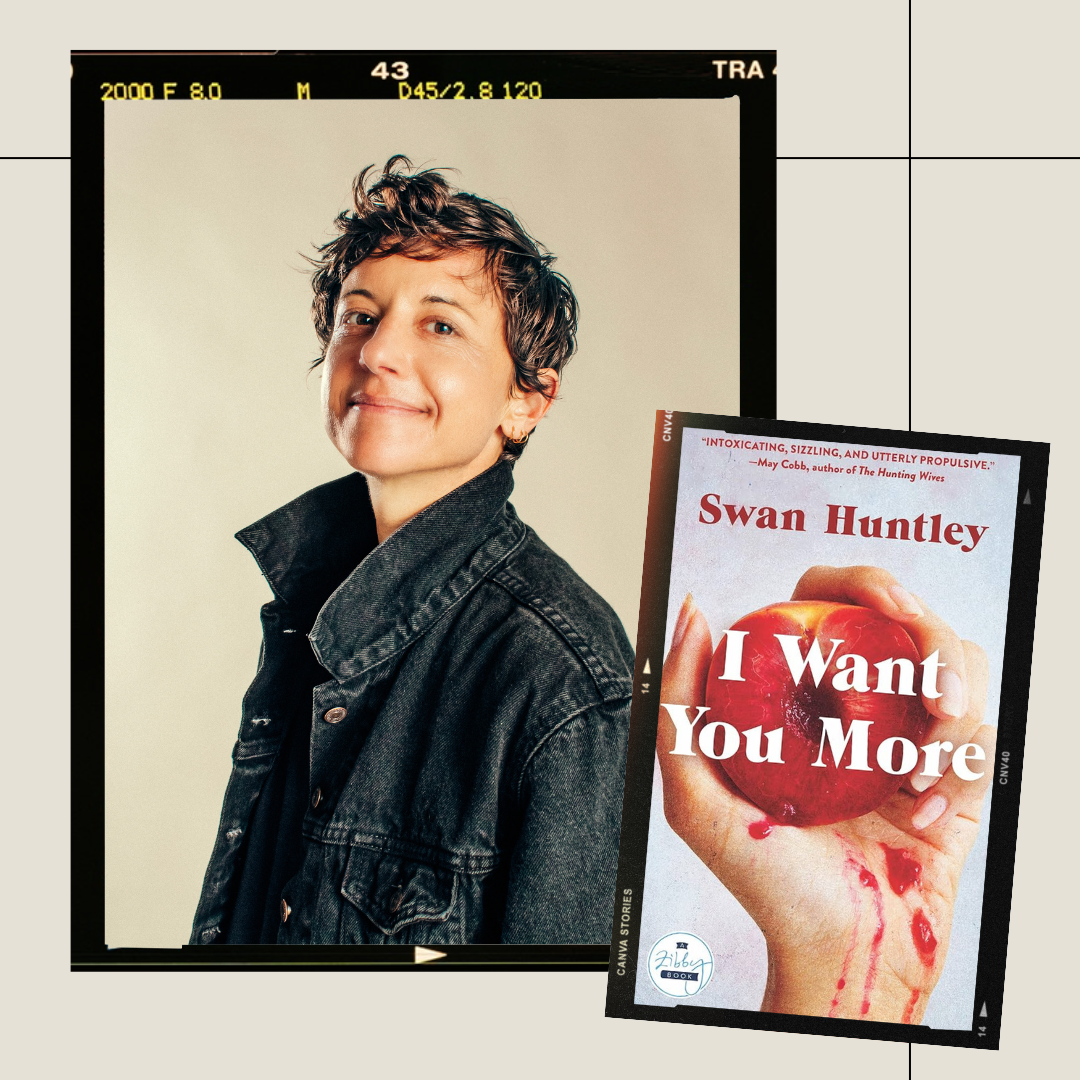
1 Session: Wednesday, November 18
6:00-9:00pm ET
Swan Huntley
Swan Huntley’s novels include I Want You More, Getting Clean with Stevie Green, The Goddesses, and We Could Be Beautiful. She’s also the writer/illustrator of the darkly humorous The Bad Mood Book and You’re Grounded: An Anti-Self-Help Book to Calm You the F*ck Down. Swan earned an MFA at Columbia University and has received fellowships from MacDowell and Yaddo. She lives in Los Angeles.
Before writing a novel, there are many foundational choices you need to make. What is the structure? What is the timeline? What is the internal arc of the main character? What is the external arc?
In this class, I’ll take students through my process of making these choices. I’ll share the template that I use before writing a novel, which distills the fundamentals into a simple form.
Highlights:
An understanding of the basic elements of a novel
Practical advice on outlining
An improved sense of how to move forward
This class has 2 scholarship available. To apply, please fill out this form by Wednesday, November 11.
NonFiction
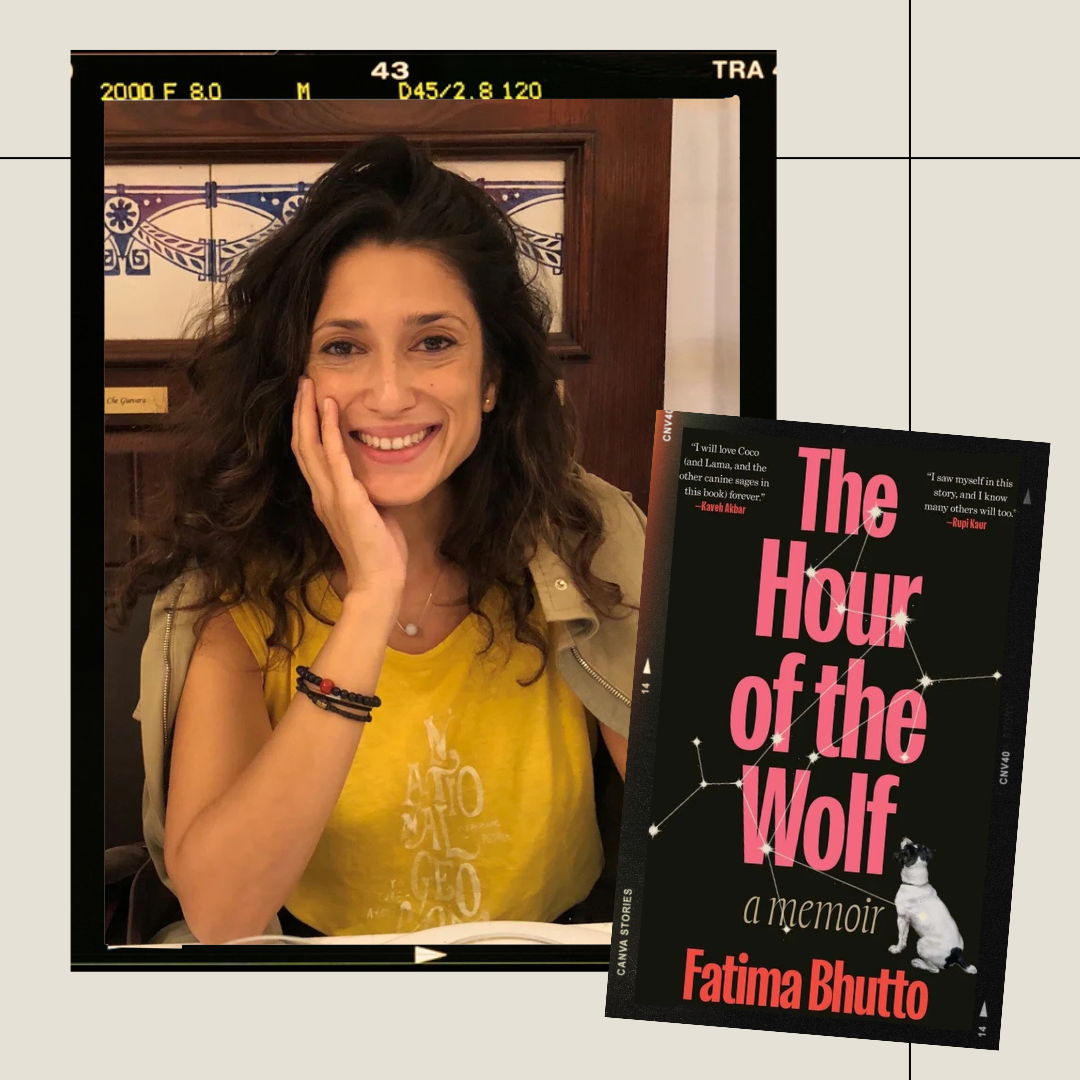
1 Session: Sunday, October 4
11:00am-1:00pm ET
Fatima Bhutto
When Fatima Bhutto met a charismatic man who promised her love, healing, and the children she’d always dreamed of, she trusted him—never imagining what would become the toxic, manipulative relationship that held her captive for over a decade. By the spring of 2020, secluded in the English countryside and accompanied by her most loyal companion, Coco, a fiercely protective Jack Russell terrier, Fatima began to question everything, a process that culminated in her most recent memoir, The Hour of the Wolf.
In this master class, Fatima will speak about how she wrote a deeply personal memoir that required her to confront her own shame and meditations on family, desire and longings. The two-hour session will include a lecture on craft, time for questions, and a brief reading list of other works of memoir.
This class has 5 full and 5 partial scholarships available. To apply, please fill out this form by Sunday, September 27.
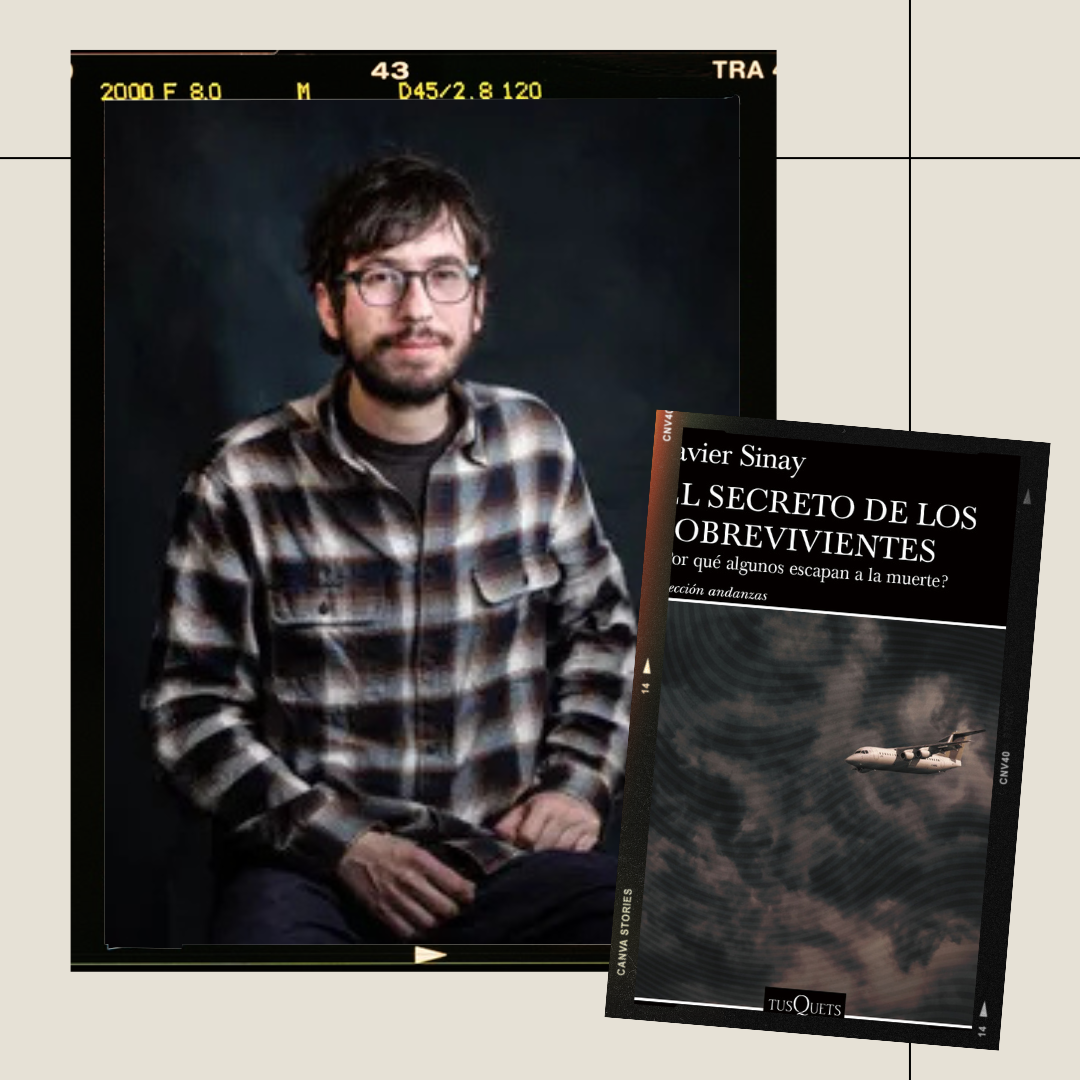
3 Sessions: Thursdays, November 5, 12, 19
7:00-9:00pm ET
Javier Sinay
This writing workshop is taught by Javier Sinay, journalist and author of the forthcoming El secreto de los sobrevivientes: ¿Por qué algunos escapan a la muerte? (The Secret of the Survivors: Why Do Some Escape Death?). His books include The Murders of Moisés Ville, the true story of his journey reporting a long forgotten true story of violence and displacement, but also resilience and cooperation. In 2015, he won the award of Fundación Gabo (often considered the most important for journalism written in Spanish language) for his story “Fast. Furious. Dead” published in Rolling Stone. He has led writing workshops, in person and virtually, at The Work Room, the Yale Journalism Initiative, UMass (College of Social & Behavioral Sciences--Journalism), Brandeis University, The Center For Fiction (NY), Lighthouse (Denver), the National Library of Argentina, Casa América (Madrid, Spain) and more. He lives in Buenos Aires.
Survival stories are more than tales of endurance—they are narratives of transformation, of the self that emerges from crisis, loss, or challenge. In this three-session nonfiction writing workshop led by award-winning journalist and author Javier Sinay, writers will learn to craft honest, compelling narratives about life's darkest trials—illness, loss, catastrophe, exile— and survival in its many forms: recovering, rebuilding, finding strength. The workshop provides tools to identify where these stories begin and end, how they progress, and what truth they reveal about who we were and who we have become.
Drawing on exemplary works by Emmanuel Carrère, Joan Didion, Martín Caparrós, Anne Boyer, and others, we'll master techniques for reconstruction: framing the protagonist's arc, pinpointing beginnings amid chaos and endings in renewal, and portraying transformation with unflinching empathy. Sinay will share methods from his narrative books on survival amid violence and displacement. The sole mandate: radical honesty. Conclude with practical tools to structure your tale and a polished draft celebrating rebirth's quiet victories.
Highlights:
Instructor and peer feedback
Generative writing exercises
To apply for a scholarship, please fill out this form by Sunday, October 28.

2 Sessions: Saturdays, November 28 + December 5
11:00am-1:00pm ET
David McLoghlin
David McLoghlin is a prize-winning poet, and a writer of memoir and personal essay. His third book, Crash Centre (2024), was recently shortlisted for The Pigott Prize. In October 2025 he won the Waterford Poetry Prize, and was awarded a Literature Bursary (grant) for memoir by Ireland’s Arts Council for an immersive nonfiction project where he will play the courses of his grandfather, Eddie Hackett, the “father of Irish golf design,” as a complete novice. An essay from this book is forthcoming in Golfer’s Journal. A personal essay has recently been published on the Poetry Foundation’s website. His poems have been broadcast on WNYC’s Radioloab and anthologized on both sides of the Atlantic, most notably in Grabbed: Poets and Writers on Sexual Assault, Empowerment and Healing (Beacon Press, 2020).
In her seminal book, The Situation and the Story, Vivian Gornick makes a surprising assertion, that writing memoirs and personal essays requires us to construct a narrator to tell our story. This narrator is “composed” by selecting and weaving the raw material of our lives into a clear throughline. Whether detached, wise, wry, or humorous as they reflect on the past, done well, this narrator wins the reader’s trust by stitching moments together and presenting them as examples of insight and understanding into a particular life with universal application.
The most practical way of finding this narrator is via exposition (also known as reflection, “glide,” or “summary”). These thoughtful passages come between or woven within more immersive, scene-like moments, and it is here that the writer provides essential information that moves the story forward, often across time, tells the reader what to think, and what the story means and is really about. Learning what your story means for you will, in turn, will help you to develop and improve your narrative voice, via well-employed exposition. Memoir is often comprised of two main elements: scenes that tell the core story of the past—the younger you—and exposition in the voice of the adult narrator, the wiser “you,” located in the “narrative present” of the book, reflecting on the past from a position of understanding. It is these moments of reflection that weave the story together, conveying the sense of “I didn’t know at the time but,” typically in the voice of hard-won insight.
Workshop Highlights:
In this master class you will gain greater clarity around differentiating scenes from exposition (showing from telling).
This will help you to learn the difference between telling the story of what happened and commenting on what it means.
Clarifying these aspects will assist you in bringing forth a narrative voice capable of knitting the various elements of your book together.
There are 1 full and 2 partial scholarships available. To apply, please fill out this form by Friday, November 20.
Poetry
Manuscript Consultations & Private Mentorships
Please note: If you’re interested in a manuscript consultation, please be sure to click through for complete pricing information. The price you see has variants. Not all prices for consultations are flat rates; some are registration fees that will go toward a final fee based upon work done. Please read individual writers’ descriptions for how they charge for their services.
I am now available to work with students individually to consult on their longer nonfiction projects. I work with writers who are interested especially in formally innovative nonfiction — whether reported and / or memoir, or blends of both. I am especially interested in working with writers coming from historically marginalized backgrounds, in particular fellow trans and queer folks.
I’m the former Deputy Features Editor of BuzzFeed News and a nonfiction writer whose essays and features have been published by a wide variety of outlets, including The Believer, Esquire, The Cut, and This American Life. I have two degrees in nonfiction writing (from Brown, and then an MFA from the University of Iowa) and have taught this genre widely. My acclaimed debut book, A Kind of Mirraculas Paradise — published initially by Scribner in 2018 — received wide critical attention for its formal innovation and ground-breaking messages. (I’m at work on its sequel.) In general, I am most interested in working with writers who are already serious about their own projects and feel they’d benefit from some coaching and fresh perspective.
To apply to work with me, please submit ~5 – 10 pages of your project for me to review. Send our sample to Kate Mabus, kate@theshipmanagency.com
$500 is my lowest rate, offered to discuss a portion of a manuscript (up to 20K words). For those who’d like me to review longer volumes of prose, we can discuss and agree upon a fair rate (up to $1000 for 60K words or roughly a “full” book manuscript). When we work together, we’ll probably have one or a few video calls to discuss your project, with periodic check-ins afterwards, depending on your needs. We can discuss and agree upon specifics when we speak initially to discuss working together. Looking forward to learning more about your project and how you feel I might be of help.

With over a decade of experience as a poet, educator, book and magazine editor, and manuscript coach, I have guided writers from early drafts through extensive revisions and into publication. As faculty at Columbia University, Reed College, and the Vermont College of Fine Arts, and numerous literary and arts residencies, I have led workshops and coached students through poetry and prose projects, and helped writers develop their voice and craft across a variety of genres.
I have spent 25 years as a book, magazine, and anthology editor, working with authors on poetry manuscripts, nonfiction manuscripts (creative as well as informative), short form pieces such as articles, stories, and essays, and more. I combine creative coaching with editorial rigor, helping writers transform their poetic voice while paying attention to both the line and larger structure.
As the author of Field Theories (2017), Gospel (2009), and the forthcoming I Hope This Helps (2025), I bring a deep understanding of creative process, structure, and revision, complemented by my experience editing and shaping full-length manuscripts.
This consultation includes:
Initial Intake: A one-hour session to discuss your manuscript’s themes, goals, and challenges. We’ll explore your vision, identify key areas for growth, and discuss the direction you want your work to take.
Detailed manuscript feedback and editing: I will provide a close, comprehensive reading of your manuscript with holistic feedback. For poetry, this includes line edits, radical revision suggestions, and organizational recommendations for manuscripts of 40–90 pages. For prose (up to 100k words), this includes structural feedback, character development insights, plot coherence, and stylistic recommendations. My approach focuses on both the fine details and the broader arc, helping you refine your work at every level.
Follow-up consultation: A second meeting to discuss my editorial feedback and revisions. We will also cover publication strategies, potential next steps for your work, and methods for generating new creative material moving forward.
POETRY
Full-length Manuscript
40–90 pages: $1,000
Chapbook Special!
15-30 pages: $350
A Poem!
1-5 pages: $75
PROSE
Book Manuscript (< 100,000 words): $2,500
Creative Nonfiction and Nonfiction
Short Form Manuscript (Essays, Stories, Articles): starting at $250 (hourly rate)
I look forward to helping you craft your best work and explore new creative possibilities!
COACHING
I love working with authors to bring their books to life from wherever they are to where they need to go!
I am available to work with you at any stage of your writing process — from idea to proposal and submission — and engage a variety of methods to help you get your work done and put your best foot forward on the page.
I have limited availability from season to season to take on just a few individual coaching clients. What you gain in me is a thought partner, a writing partner, and a sounding board.
What we’ll do together:
Brainstorm: Helping you to dream up and actualize ideas for your book.
Drafting: Helping you to develop your first draft and then further develop that draft into a finished manuscript.
Encouragement: Providing support and accountability to help you overcome obstacles and achieve your goals.
Proposals: Working with you, once your manuscript is ready, to develop a comprehensive book proposal.
Pricing: Begins at $750 per week (ideal project commitment is 12 weeks)

“I chose to work with Lillian-Yvonne on my second manuscript because they're a true innovator in the field of poetics, leveraging technology and other modes of inquiry to push the limits of language, to push the poem itself beyond what we might conventionally think it can say or do. Lillian-Yvonne’s critiques are always astute, and challenging, and simultaneously uplifting, somehow, while always respecting what the poem itself is trying to accomplish. Ultimately Lillian-Yvonne helped me shape my manuscript into something more than I myself imagined it could be. And that’s a gift.” - Jubi Arriola-Headley
$400/hr
Lillian-Yvonne Bertram will provide a holistic reading of the manuscript and comment on the overall book concept, ideas, and major themes. This option also includes comments on poem ordering and arrangement, with extensive line edits and comments on individual poems. Manuscript length 48-64 pages. Additional fee to be negotiated for manuscripts between 64-80 pages.
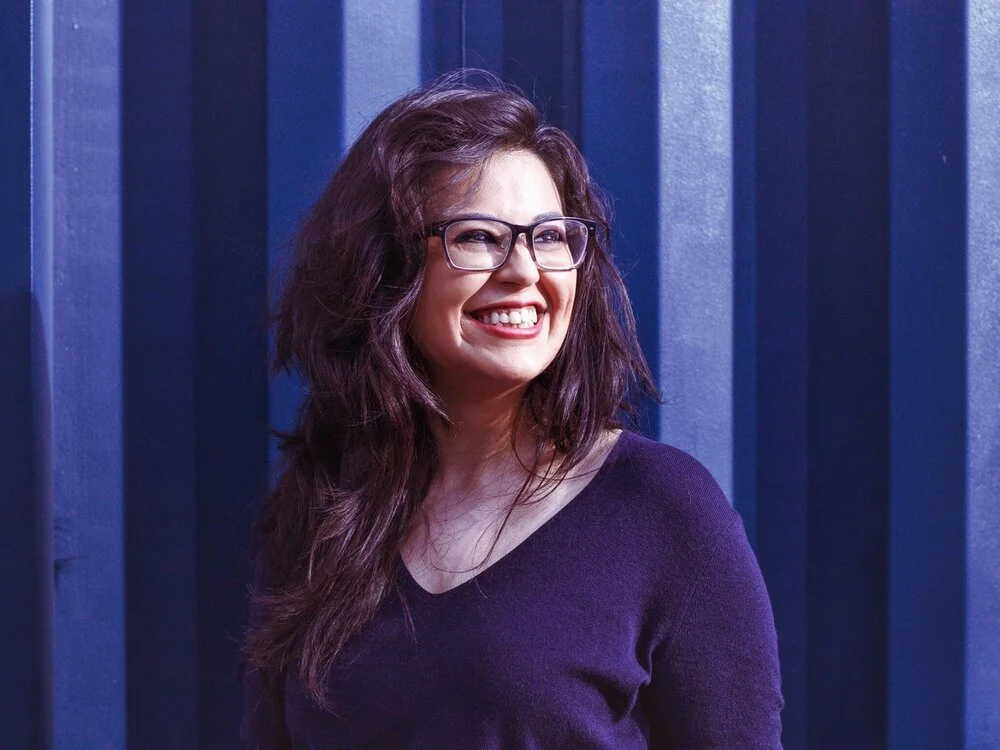
ON HIATUS
I teach in English and Creative Writing at the University of Virginia, where I’m in the core MFA faculty. I’ve previously taught at Emory University, the University of Michigan, and North Carolina State University, and I’ve also been in the core MFA faculty at the latter two. Many manuscripts on which I have consulted have become award-winning collections with leading presses. Working one-on-one with writers is one of my favorite responsibilities. I have a particular love for questions regarding sequencing and for offering generative feedback, although I enjoy every aspect of manuscript critique, including offering practical recommendations and tips for publication and promotion (if desired).
My experience as a poet lends itself to helping writers re-envision what they have created; my experience as a scholar of poetry lends itself to offering nuanced readings of the text as it is as well as identifying areas it may wish to further explore. I also have a substantial editorial background: I’ve been poetry editor of AGNI (where my time on the editorial staff totaled thirteen years), art editor of At Length, a guest editor for the Academy’s Poem-a-Day, served on the Alice James Books Editorial Board, and served as a reader or contest judge for several book prizes, among other commitments.
I am the author of Arrow (Alice James Books (U.S.)/Carcanet Press (U.K.), 2020), which received coverage in the New York Times, NPR, the Guardian, and other venues, and received the GLCA New Writers Award, the Seamus Heaney First Collection Poetry Prize (U.K.), and other honors. Poems from my second in-progress collection, The B-Sides of the Golden Record, have been published in the Academy of American Poets’ Poem-a-Day, Kenyon Review, The Offing, Massachusetts Review, Poetry, Split This Rock’s The Quarry, LARB Quarterly, and elsewhere. I’m also currently writing a scholarly book titled Grave Dangers: Poetics and the Ethics of Death in the Anthropocene, which is under advance contract with the University of Minnesota Press, and my peer-reviewed critical articles have appeared in Cultural Critique, Modernism/modernity, Interdisciplinary Studies in Literature and the Environment, Verge: Studies in Global Asias, and elsewhere. I’ve received fellowships from the Poetry Foundation and Kundiman, and I’ve been shortlisted for the U.K.’s Forward Prize.
Figuring out what makes books tick is one of my favorite things to do, and I look forward to working with you.
Manuscript review: This manuscript consultation includes 60 minutes of Zoom time to be used however you and I decide would be most beneficial to you (recommended: a 30-minute initial conversation about your book, your goals for it, and your sense of where it stands and what it needs, followed by a 30-minute post-read conversation). Next, I will provide a holistic reading of the manuscript and comment on the overall book concept, ideas, and major themes, including on sequencing and arrangement. You can also select up to 15 pages on which to receive extensive line edits, questions, and analyses. You will also receive resources to aid in revision of individual poems as well as the full collection. We’ll discuss a timeframe for our work together in our first meeting (or over email, if you elect not to use any Zoom time on an initial meeting). Manuscript length up to 80 pages. Additional fee to be negotiated for longer manuscripts. $400
Manuscript review + revision: At this level, I will also read the revised manuscript with the same level of response. You’ll also receive up to 60 additional minutes of Zoom time, with the schedule determined collaboratively (e.g. 30 minutes after first-read feedback and a 30-minute post-second read conversation, or the full 60 after the second read). The goal of the additional Zoom minutes is so that we can discuss my feedback, any additional questions you may have, and other associated topics that may be on your mind, such as publication. We’ll discuss a timeframe for our work together in our first meeting. $700

I am a poet with three published poetry collections and have been working one-on-one with writers for over five years, including consulting as faculty on collections from students at Randolph College, the Jack Kerouac Disembodied School of Poetics, UC Riverside, and NYU. My accolades include a Pulitzer nomination, the 2017 National Poetry Series, a Dorothy Sargent Rosenberg Poetry Fellowship through the Poetry Foundation, and more. I have an MFA from the University of Arizona as well as an MA in English Literature from UC Irvine and currently teach poetry as part of Randolph College’s Low-Residency MFA program
I believe in providing in-depth generative feedback. In our manuscript consultation, I will work to give a sense of how I’m reading the manuscript, what excites me, but above all what I believe could be emphasized, expanded, focused in on, and written through. This will include a combination of suggested edits, expansions, generative prompts, reordering, and/or reading recommendations.
This will typically take the form of an email exchange followed by a close-reading. Depending on manuscript length, reading will take between two to four hours. I will write and provide detailed notes throughout this process. In addition to the notes, we’ll meet virtually for a discussion of the work, preferably two hours. As I charge by the hour, however, this process is quite flexible, and I am willing to work with what works best for you.

I model my manuscript consultation approach after radical empathy and radical listening. This manuscript consultation aims to be supportive, inclusive and collaborative, with an eye towards helping your novel become the best possible version of itself through a detailed and deep understanding of the craft of fiction. What’s included:
A one hour introductory phone call to understand what your needs are, what you are struggling with and what you hope to achieve.
An extensive editorial letter beginning with the manuscript’s summary and strengths, followed by dedicated sections on: worldbuilding, characterization, character relationships, story arc/narrative structure, pacing/timeline, emotional effect, language and dialogue, in addition to anything specific to your manuscript that a) you want to address or b) that comes to my attention while reading.* The editorial letter will conclude with suggestions and ideas for how the overall manuscript might be improved.
*Examples: setting, interiorization, stakes, internal vs. external journey, braiding multiple storylines, logical inconsistencies/plausibility, narrative POV, narrative subversion (“twists”), reader investment, tone and atmosphere, scaffolding, beginnings and endings, compression and expansion, thematic question(s), authorial vs. character knowledge, missed opportunities, sensitivity remarks and more.
A one hour follow-up phone call after you have processed the editorial letter, have any questions and/or would like to discuss your revision plan. During this call, I can also answer any questions about the querying and publishing process.
Note: Line edits are not included.
All genres of fiction are welcome, including speculative fiction.
Please submit the first 20 pages of your novel to see if we are a good fit.
Max word count: 100,000 words.
Flat Fee $2,500

True stories, well told, matter! I will give line-by-line editing and a letter with detailed editorial notes on your nonfiction manuscripts. That includes book chapters, essays, artist statements, book proposals, articles, work samples, or any other form of nonfiction prose.
Price: $200 flat fee for the first 20 pages (12 pt. Times New Roman, double-spaced, minimum of 1-inch margins) and $4 for every page after that.
A la carte option: For a manuscript consultation that includes a letter with detailed editorial feedback, but no line-by-line edits, the flat fee is $150 for the first 20 pages (12 pt. Times New Roman, double-spaced, minimum of 1-inch margins) and $3 for every page after that.
Note: payment is for initial flat fee; additional page fees to be determined and invoiced separately.
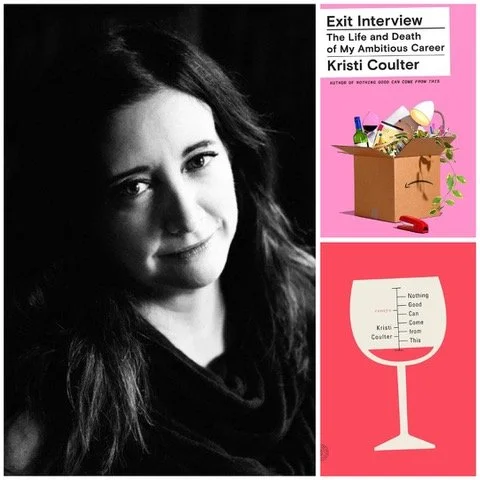
I’m the author of two popular and critically acclaimed memoirs: Nothing Good Can Come From This and Exit Interview: The Life and Death of My Ambitious Career, as well as the forthcoming novel Album Tracks. My essays and short fiction have appeared in publications like New York Magazine, Elle, The Believer, The Cut, The Mississippi Review, Columbia Journal, and many others. I’ve been a finalist for the Washington State Book Award, a 40 Over 40 honoree, and first runner-up for The Mississippi Review’s short story award, and have been awarded residencies at Ragdale and The Mineral School. My work is particularly known for its formal playfulness and tragicomic elements; I’ve been described as “the love child of Joan Didion and David Sedaris,” which I think was a compliment. I have extensive experience teaching creative writing at places like Hugo House, the Universities of Michigan and Washington, Write Doe Bay, and here at the Work Room.
As a manuscript consultant, my superpower is guiding writers from a chaotic or anemic first or partial draft into a deeper understanding of what their book is trying to accomplish and how it should be structured to achieve that goal. I love sending previously exhausted, bewildered writers into the revision process with a solid plan and a gleam in their eye, and I employ a mix of empathetic listening, coaching, and direct (but always kind!) feedback to make it happen.
Full Manuscript Option
This option begins with a one-hour conversation where we discuss your overall vision and goals for your project, where you feel like it’s going well, and where you’re struggling. I then read your manuscript in full and write a detailed editorial letter covering key story elements such as structure, voice, character, dialogue, tension, and narrative stakes, along with anything else you’ve specifically asked me to read for. I will also line-edit 10-15 pages of your manuscript to show you where you have opportunities to improve elements of prose throughout the book.
Once you’ve had time to digest my written feedback, we’ll have another one-hour meeting to discuss my notes and talk about a concrete plan for revisions. I’m also happy to chat at that time about paths to publishing or any other aspect of the writing life. Follow-up calls are optional and offered at a reduced rate. Maximum word count: 100,000 words.
First Fifty Pages Option
I’m also available to consult on just the first fifty pages (or roughly 12,000 words) of your manuscript, which often reveals strengths and opportunities that extend throughout the whole. This offer also begins and ends with one-hour meetings and includes an editorial letter addressing the key story elements as reflected in your fifty pages. It does not include sample line edits. Maximum word count: 12,000 words.
Fee Structure
My full-manuscript fee is a flat $2,000 for up to 60,000 words, and a flat $2,500 for up to 100,00. For the first fifty pages, I charge $1,200. In all cases, the first half is payable before we start work, and the remainder after the work is complete. (If for some reason we decide after the first meeting that we aren’t a good fit, I’ll refund your first payment minus $50.)
Getting Started
Before I take your money, I want to feel sure that I’m the right person to help you, so please submit the first 20 pages of your manuscript in advance. I’m open to all genres of fiction and memoir, including memoir with reported elements. When people ask about the right timing for working with me, I generally say “When you’ve pushed it as far as you know how to on your own, or you can no longer see the forest for the trees.” Both of which are for you to determine, of course.
I look forward to helping you move your book closer to your vision for it, and to bolstering or reigniting your sense of focus and energy. Let's have some fun.

My manuscript consultation is based on an examination of how a work balances the craft of writing with the substance of conscience, the personal and the political. These guiding principles are ones that I've culled through my fifteen years working for social change and twelve years writing about it, including in my recent book Craft and Conscience: How to Write About Social Change. As the creator of the Writing with Conscience class which I've offered through The Shipman Agency, the New School, and other institutions I'm inspired by helping more writers to be writers of conscience.
I offer two types of manuscript consultations:
1) Stand Alone Manuscripts - Essays, Articles, Op Eds, Stories.
Sliding scale starting at $150 based on length/word count.
This includes substantive summary feedback about what is working well and suggestions for improvement as well as line edits.
2) Book Manuscripts - Draft manuscripts for book length works.
Sliding scale starting at $750 depending on the length of work.
I will provide summary feedback on how the manuscript hangs together as a cohesive whole, respond to the narrative flow and narrative elements, whether the desired themes are coming through, and whether there is a balance between personal and political themes.
For an additional fee, I also offer post feedback consultations via phone/zoom to discuss any follow up questions.

I have taught poetry workshops and advised poetry thesis manuscripts for the past decade at Princeton University, as well as in the MFA programs at NYU and Columbia, along with guest workshops in graduate and community programs around the country. I have seen manuscripts through from rough drafts, extensive revision, and into publication. I have published four of my own books of poems including Days & Days (Knopf, 2019) and the forthcoming Pacific Power & Light (Knopf, 2024). Many of my poems have appeared in The New Yorker and elsewhere.
This consultation includes an initial hour-long meeting and conversation about what you imagine your book to be, where it comes from and where you would like it to go. What are your concerns about the work, and what are you most excited about. With these things in mind I will closely read the book and provide both holistic notes as well as suggesting line edits and possible developments and alternatives, including ordering of the manuscript and “writing into the corners” of the book. I will send you these edits and ideas and then we will meet a second time to discuss them, as well as publication possibilities, and strategies for creating new work in the future.
I look forward to working with you!
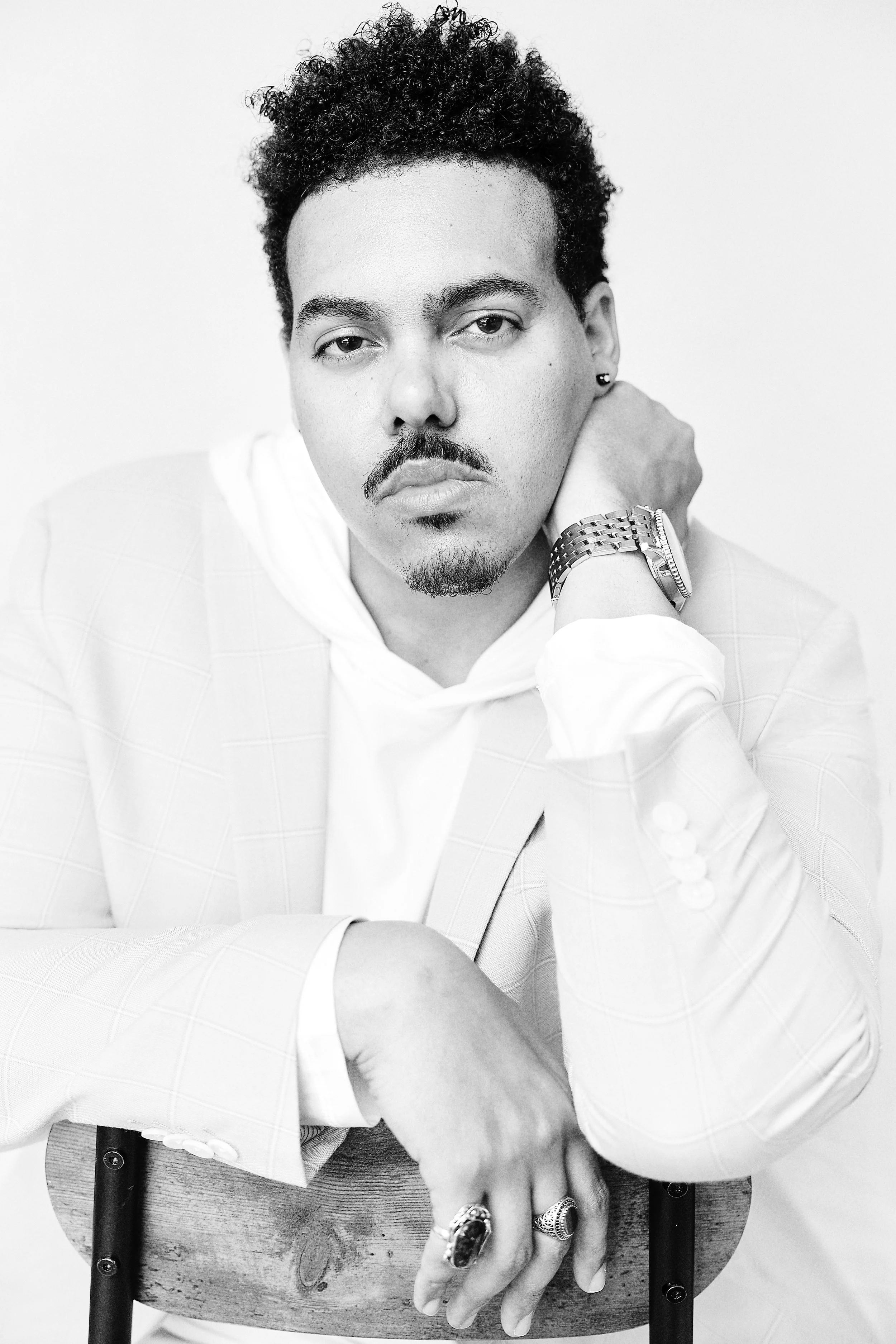
I’m interested in working with prose writers who desire to have their short fiction, personal essays, or novels receive extensive global feedback. Typically, I like to learn a bit about what I’ll be working on to see if we’re a fit before moving forward, and I may ask to see a short excerpt (1-3 pages) of the piece, so that I can gauge my interest and reading speed.
I am also excited to work with writers who are preparing to apply to graduate-level creative writing programs, including MFA and PhD programs. As a graduate of University of Minnesota’s MFA program and the Wallace Stegner Fellowship at Stanford University, and as a former Provost Fellow in USC’s PhD in Creative Writing and Literature program, I feel well-equipped to help. I have also served as a juror/ reader for such programs for several years, which has given me insight about the application process from the faculty perspective. I am happy to review personal statements, statements of purpose, and writing samples, as well as to discuss the decision to apply for such programs.
I am open to longer-term coaching on a case-by-case basis, but prefer to work on a project together before moving forward with such arrangements.
I began my teaching career in 2012, and my fiction has earned awards and honors from the National Endowment for the Arts, the Paris Review, the National Book Foundation, the Booker Prizes, and PEN America, to name just a few.
For full-length manuscripts (novels and memoirs), my rate is $4,000. For shorter work, my starting hourly rate is $150, which includes two reads of the manuscript and a feedback letter, which typically ranges from 2-4 pages, addressing elements of the writing such as:
Character Development (round vs. flat; wounds, flaws, & fears)
Character Desire (concrete & abstract; internal & external; tangible & intangible)
Plotting & Structure
Stakes/ What’s at Stake?
The First Pages (inciting incident)
Backstory
Point of View
Narrative Distance
Voice & Style (in larger terms)
Obstacles, Conflict, & Complications
Pacing
Suspense & Foreshadowing
The Final Pages (crisis; climax; denouement; reversal)
Character Arcs
Theme & Premise
Setting
Text & Subtext
Missing or Irrelevant Scenes
This does not include copyediting; however, as a natural part of tracking the work's movements, and strengths and weaknesses, a large degree of marginalia is almost guaranteed. We’ll agree to a turnaround window prior to getting started, but a story under 30 pages will typically receive feedback in a week’s time. Full-length manuscripts typically take 4-6 weeks.
I'm also happy to speak over the phone after you've received my feedback to discuss it further for approximately one hour.

Short stories, Personal Essays, Memoir
Me; I have taught for decades in the US (across the country and at a range of institutions including Columbia University and CCNY) and abroad, published collections of stories, essays, and novels, and produced anthologies of seminal work on issues of social justice including Palestine and world activism. I have also published poetry and work as a freelance journalist, and served as a judge for prestigious awards including the PEN Hemingway Prize. I meet writers where they are, with regard for who they are as people, what has moved them to write, and with a view to helping them go further. I help writers to lean into the emotional truths that underlie their writing, to draw on their strengths, and to develop under-utilized aspects of their repertoire. As a veteran in the literary world, I have an extensive network of contacts across the media and publishing industries. I routinely connect my students to industry professionals when I feel their projects are ready.
You: Are not mainstream in your outlook. Your vision is wide, and you are moved to write a work that has deep resonance for your community, your environment, your country, your world. Your work could be intimate and personal or complex and global or all these things. I like to work with writers who have a complete project in hand. Please provide a work sample of up to 10 pages for review to evaluate fit.
For full-length manuscripts (novels, short-story collections and memoirs), the rate is $4,000, which includes the following:
Line-edits
Feedback letter of 5-10 pages, addressing elements of prose writing including beginnings/endings, voice, character development, plot/structure, narrative distance, authenticity, language, point of view, setting, and scene.
2 hour long conversations during and after the review
For shorter work, my starting hourly rate is $150, which includes a feedback letter between 2-3 pages.
Having served as a juror for some of the most competitive conferences and residencies in the United States, I am happy to review personal statements and writing samples and provide guidance with applications. The fee for coaching at this level is $150/hour.

All Genres
Maria is a New York Times-bestselling, Hugo and World Fantasy Award-winning novelist, translator, poet, and dramatist whose work unearths hidden meanings, characters, and possibilities in stories we think we know. She's the author of eight books, most recently Beowulf: A New Translation (2020) and The Mere Wife (2018). In 2023, she delivered the Tolkien Lecture on Fantasy Literature at Oxford, and released a reimagining of Virgil's Aeneid into a full-cast musical for Audible. Her version of the literary world is one in which all the genres merge, all the storytellers are equally thrilling, and there are definitely dragons. Her work on Beowulf was described in The New Yorker as "storming the dusty halls of the library, upending the crowded shelf of Beowulf translations to make room for something completely new."
Maria has most recently taught writing at Sarah Lawrence and Bennington, and she regularly teaches workshops at universities around the world. For the Shipman Agency Workroom, she's taught sessions on creating the fantastical, finding your voice, adapting the classics into contemporary work, and editing yourself, among many others.
Her consultations will help you find the tools to go deeper in your work, to finish and submit your newly revised novel, or even to totally reinvent yourself as a writer, diving into the project you've been too afraid to start. She's also happy to consult with writers who don't have manuscripts yet, as long as they have an idea and a work sample.
To begin, please submit a short description of your project, and of your consultation goals, which Maria will review to make sure it's a good fit. If approved, the next step is registering and paying the initial $300 for one hour of work. You'll submit the first 15 pages of your manuscript, as well as a synopsis of the overall project and a bio. Maria will provide written notes on the first 15 pages, along with an estimate for the full job.
If you don't have a manuscript yet, the consultation series will begin with the above - short description and consultation goals, review, initial payment - and then you'll begin with an hourlong Zoom session to make a plan of attack.
The consultations will include Zoom or phone sessions with questions, research suggestions, creative brainstorming, and live feedback. Together, you'll make a plan that suits your project. Maria's style is both empathetic and pragmatic - she'll help you achieve your writing goals, and offer a great deal of feedback and ideas along the way.
The payment is for one hour of work, plus preparation of an estimate for the full project. Additional hours will be invoiced and paid after registration.
Her rate is $300/hour, and her minimum is $1200.

Poetry
I’ve taught in the graduate writing programs at The New School and Columbia and have guided MFA poetry collections of a great variety of poetic schools and backgrounds. My eclectic taste for whatever is surprising, insightful, and urgent is evident, I hope, in the many brief reviews I’ve written for the Academy of American Poets, at poets.org. For $1,250 I can give a manuscript a close read with notes throughout, a written response of 1-2 pages, and two online meetings. For $1,500 I will read the revised manuscript as well, with the same level of response, both on the page and in a brief report, and in another online meeting.
Nonfiction
I have worked with authors on works of memoir, journalism, creative nonfiction, and academic manuscripts. For $1,250 I read the manuscript and write up a 1-2 page response, provide selected pages with detailed line edits, and have two online meetings to discuss. Depending on the readiness of the manuscript this may be mostly about overall structure and the development of your book’s best feature, or about line edits for style and power. I’ll also advise on steps toward publication. At the $1,500 rate my response is 4-5 pages and I return the whole manuscript with notes throughout.
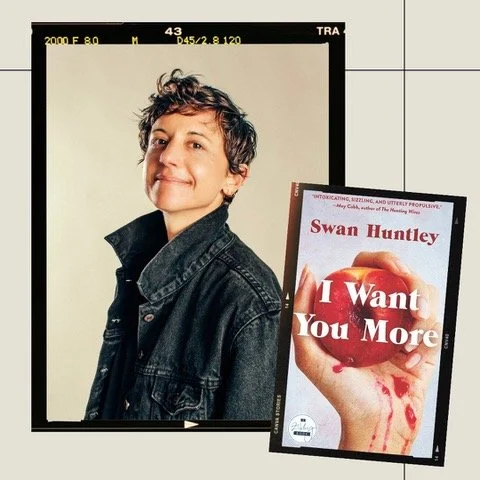
Hi, I’m Swan. I’ve published four novels and two illustrated books for adults. I’ve worked extensively as an editor and teacher. I would describe my feedback style as both very honest and incredibly compassionate. I know how important it is to be told the truth - in a really kind way.
If you want to work with me, you can send me the first 10 double-spaced pages of your novel. I will make notes using Track Changes. Then we will have a discussion about your work and the estimated cost for a read of the full project.
My rate is $250/hour. My minimum fee is $2,500.

Short Story collections, Novels
Full manuscript $1750
A manuscript consultation with me centers energy, joy, and deep intentionality. In engaging with your fiction, I prioritize radical listening and open communication, ensuring your creative vision and unique voice will not only guide our discussion, but also shape my engagement with your pages. I seek to meet every project with equal parts rigor and respect. Committed to encountering work through a decolonial lens, I am especially equipped to engage with projects that decenter the white, western gaze while challenging and subverting a colonial hegemony. I welcome projects that play with time, structure, point of view, and language in a way that expands our understanding of literature while championing historically disenfranchised voices. Empathy brews at the center of this work—work I hope we will do together.
Specifically, you can expect:
A one-hour initial conversation to discuss your vision, intentions, and goals for your project. What you wish to achieve, and how I can best support your aspirations.
A 4-6 page (single spaced) editorial letter addressing your project through the lens of your clarified vision. As I believe we writers learn as much from leaning into our strengths as we do from identifying where we might push our work even further, I will spend proportionate time considering both with a consistent focus on locating the heart of your work. Fictional craft elements I’ll consider include character development, structure, voice, tone, plot, time/pacing, point of view/perspective, and place, among others.
Detailed line edits and margin notes on the first 20 pages of the manuscript.
A one-hour follow-up conversation to address any questions you may have while charting a revision plan that feels approachable and in line with your goals.
Flat fee applies to projects up to 100K words. A $1 fee for every page over 100K applies.
My ask of you: Please send the first 20 pages of your manuscript to Work Room manager Kate Mabus, kate@theshipmanagency.com so I can determine if I will be the best reader for your work. Due to the personal nature of engaging honestly with one’s work-in-progress, I wish to honor your time, and ensure my approach will best align with your project and your needs.
As a mixed Kanaka Maoli (Native Hawaiian) writer, reader, and teacher, I am committed to championing voices that have been historically marginalized and disenfranchised. I have taught creative writing at the graduate level, provided manuscript consultations, and led workshops and craft seminars for the last five years. My goal is to bring this experience and enthusiastic investment in artmaking to your work-in-progress, helping you identify and hone your individual voice rather than assert my own.
Add-on / A la Carte:
A one-hour consultation on querying agents, including a thorough review of a query letter with line notes: $300

I will provide feedback about your poetry manuscript, including line edits, radical revision suggestions, and organizational recommendations. This feedback will come in the form of notes and conversation. The cost is $750 for a 2-hour consultation, including written notes, for manuscripts between 40 to 70 pages.
Rickey Laurentiis is offering tutorials and consultantships in the poem, the manuscript & the syllabus.
Rickey Laurentiis is a poet who was raised in New Orleans, Louisiana, to study light. Their debut book, Boy with Thorn, won the Cave Canem Poetry Prize, the Levis Reading Prize, and was a finalist for the Kate Tufts Discovery Award. As a curator and art writer, they have work with a number of institutions including The Andy Warhol Museum, the Carnegie Museum of Art, John Hopkins Archaeological Museum, and the the Museum of Modern Art in New York. Their next book is Death of the First Idea, coming froom Knopf in 2025. Literary honors include fellowships from the Lannan Literary Foundation, the National Endowment for the Arts, the Poetry Foundation, the Whiting Foundation, and the Center for African American Poetry and Poetics at the University of Pittsburgh. Friends call her Riis.
In private consultantships, I will work one-one-one in periods of an hour or more in three subjects: individual tutorials concerning packets of poems (no more than 15 pages of work) & full consultantships on the poetry manuscript (no more than 60 pages of work) and writing syllabi (including poetry, fiction and nonfiction courses). In my tutorials and consultantships, I aim to listen carefully; to hear what lives under the ask towards what’s best for the piece of writing at hand or the course being developed. I want the tutor or client to leave feeling restored to their assignment as writer, and with specific tactics to apply to their writing in its general improvement, and specific strategies to apply in the classroom.
Tutorials, 1 hour, $150
Consultantships 1.5hr or more, starting at $500
Fiction, Nonfiction
Sarah Manguso is the author of ten books of fiction, nonfiction, and poetry. Her work is frequently described as blurring or reinventing genres, and her books have been cult hits (300 Arguments), bestsellers (Liars), and critical favorites (Very Cold People).
She has taught creative writing for more than twenty-five years, both privately and at various institutions of higher learning, and she would welcome the opportunity to work with you on a manuscript of fiction or nonfiction.
Her Work Room clients have gone on to sign with literary agents and successfully publish their books both domestically and abroad.
To get started, please register for the overview session, which is $250. Sarah will provide notes and line edits on the first few pages of your manuscript, along with an estimate for her work on the full manuscript.
Sarah’s work includes detailed line edits and comments on all aspects of the writing including plot and character development, structure, what to add, and what to cut, as well as a holistic assessment of the entire project. After you’ve had time to review her notes, you’ll have an hourlong Zoom discussion to ask questions.
The minimum fee is $2500. Typically a full-length manuscript is anywhere from $3750–$6500, but Sarah is happy to work within any budget starting at $2500. Scholarships are also available on a case-by-case basis.
Payment for the overview session is due when signing up. The manuscript work will be invoiced and paid in two increments: half is due upon starting the work, and half is due on completion.

“Greg’s approach to teaching and mentorship is representative of who he is as a whole: thoughtful, compassionate, insightful, honest, and humorous. I’ve benefited from one-on-one sessions with him and have also taken part in a seminar that he led. In each setting, Greg excelled at providing his students with the individualized counsel that an aspiring writer can only hope for. He provides equal parts praise, guidance, and compassionate critique in a way that encourages his students to harness and unleash their own creative prowess."
- Clay Klaus-Wade
"Greg is a fantastic teacher. He is encouraging, specific in his teachings and an effective communicator. He clearly loves to teach and to share his knowledge. He always involves the student and simultaneously emboldens the student to craft their own style. He creates a safe space for each student to ask questions, to test their own theories and assumptions."
- Buffy Shutt
Hi! Thanks for your interest in learning with me. A little bit about myself: I am the author of the memoir, Born to Be Public, which has been named a best book of 2020 by NPR, O, The Oprah Magazine, Electric Literature, The Brooklyn Rail, Largehearted Boy, and was a 2020 Goodreads Choice Award Nominee for Best Humor. I am currently working on my next memoir, Not a Wonderland: Dispatches From a Body That's Trying to Kill Me, and Save Our Serotonin: An Illustrated Guide for the Modern and Mentally Ill.
My teaching philosophy is pretty simple: If you care about your story, someone else will, too. My job—and joy—is to help my students hone their craft by looking inward. Because only by looking inward can you learn to write about the way you move through the world. I'm not here to teach as much as I am to hold up a mirror and help you mine your reflection for the things you might not have noticed before or hadn't thought to consider in one way or another—all of the things that make up the fabric of your being, the things that should be radically honored both on and off the page.
This consultation will begin with an initial hour-long meeting and conversation about your work-in-progress. I want to hear about why you started writing your project, and where you imagine it going. I want to know why your project matters to you. We will also discuss any concerns or challenges you face, as well as what you want to achieve by the time you finish your final draft.
Following our conversation, I will then give line-by-line edits, along with detailed editorial notes on your work-in-progress. This can include a nonfiction manuscript, book proposal, book chapters, query letter, essay(s), article(s), work samples, or any other form of nonfiction prose.
Price breakdown: $200 flat fee for the first 20 pages (12-point Times New Roman font, double-spaced, and one-inch margins), and $3 for every page after that.
A la carte option: For a manuscript consultation that includes a letter with detailed editorial feedback, but no line-by-line edits, the flat fee is $175 for the first 20 pages (12-point Times New Roman font, double-spaced, and one-inch margins), and $3 for every page after that.
Please note: Payment is for the initial flat fee. Additional page fees to be determined and invoiced separately.
I look forward to working—and learning—with you!

AX (Ana) Mina
As a nonfiction writer, you have great ideas. How do you get the word out and build a platform? I offer coaching as a tool to help you refine your ideas, communicate them effectively and find the right people to support your work.
You have great thoughts to share — how do you communicate them crisply and precisely for public consumption? Think of thought leadership as a layer that supercharges your communications efforts. Building from my experience developing communications strategy, we’ll develop a custom strategy for getting the word out there about your work and your best ideas.
Every writing client has different needs, and we’ll work on a toolkit that will help you take action on bringing your ikigai, or life’s purpose, into fruition through guided exercises on a tool called Quenza and ongoing coaching sessions. Here’s an example of some of the tools we can explore together:
Brainstorming and ideation sessions — start with your idea, no matter how rough, and let’s refine it through active feedback and idea generation
Working through creative blocks, using creative strategy and ideation, meditation, yoga, tarot and somatic wellness practices (I’m a certified trauma-informed yoga teacher with training in secular mindfulness)
Getting the word out: Public speaking skills, and telling the story of yourself and your work
Leadership and management skills, whether for those leading creative communities and mission-driven organizations or those running their own business.
Clarifying your core values and mission as a writer (i.e., your ikigai)
Coaching is a partnership, and I’m happy to take a first 30 minute call for free to determine two things: (1) how we vibe together as people and creative and (2) whether there’s a fit with what you’re looking for and where I can help. If we mutually agree to move forward, we’ll develop a coaching package that works for you — whether that’s finding your ikigai, developing your platform or something more custom. We can also do ad hoc, ongoing coaching to help you work through creative blocks.
Sessions are a sliding scale of $125-200 for up to 75 minutes (with a suggested rate of $150), and a 5 pack is available for $500 - 800 (20% discount).

The expectation that writers “rip off the Band-Aid” or “just do it” when the perspectives we’re called to express feel painful or triggering, is a form of normalized suffering that racial capitalism and patriarchal industries depend on. By overriding feelings of resistance and hesitation in favor of production, we lose critical information, and the capacity to form language unique to our individual journeys.
If you’re into pain, that’s great. But for everyone else: writing doesn’t need to feel tortuous. Persistent anxiety and physical manifestations of stress aren’t necessarily proof that you’re “doing the work.” Insight—about even the darkest of subjects—can take place in moments of connection, gratitude, curiosity, and pleasure. Sometimes the language you need requires going outside, working with your hands, developing personal rituals, re-learning rest, shifting (even temporarily) the orientation and shape of your life ... We can think through the specific auxiliary practices that make sense for your body, your budget, your values, and your work.
I’m passionate about working with writers who are ready to develop multimodal strategies in support of specific projects, concerns, or interests. This approach to generating and revising work involves a commitment to evaluating the ways you spend time and relate to others during all of the time that you aren’t writing. It isn’t for everyone. Ask yourself if you are open to:
developing practices of invitation that honor your physical and emotional boundaries, while intentionally creating space for them to expand;
learning to recognize, trust, and follow the languages/silences that are unique to you, even when they extend beyond recognizable signifiers and established frames;
reframing mastery as a commitment to curiosity and honesty about what the world looks like from exactly where you are;
preparing yourself in physical and material ways for the language that you need to arrive.
If so, let’s start with a 30-min call. You can share your goals and we’ll decide on a plan that feels meaningful to you. This consultation is available to individual writers as well as small, focused groups working in a similar vein. Due to the nature of the process, in most cases a minimum of two sessions will be required. A sliding scale is available for QTBIPOC writers and writers with disabilities.
The following is provided as a guide; actual prices will depend on the scope of your project.
Standard Fee:
Starting at $150 / 75 minutes for a single writer
Starting at $225 / 90 minutes for small groups
Sliding Scale:
Starts at $100 for a single writer and $175 for small groups

Graphic novels, memoirs, and book-length comics comprise one of the fastest growing book markets world wide, but commercial publishing houses don’t always offer rigorous editing the way they might with books of more traditional prose. I will offer detailed editorial notes on drafts of graphic novel, memoir, essay, and comics projects ranging from short, stand-alone pieces to book-length projects. As a comics editor, I examine the effectiveness of the text—the strength of the language, voice, details, and dialogue—as well as the image—pacing, framing, perspective, and technique. I also critique the relationship between the two, and offer suggestions as to how text and image can function together most effectively to communicate a story, argument, or idea.
$600 for a manuscript up to 20-pages;
$800 for a manuscript up to 50-pages;
$1200 for a manuscript up to 120 pages;
$2000 for a manuscript up to 250 pages
Please note: If your graphic manuscript is particularly prose-heavy, fee structure can be discussed separately.

Spring Consultation Offer (April 20-June 1)
Novel/YA Novel
I will provide editorial coaching, revision notes, and feedback in the form of an editorial letter and one virtual meeting (1 hour). $400
Poetry Manuscript
I will provide editorial coaching, revision, comprehensive notes, and individual line edits in the form of an editorial letter and one virtual meeting (1 hour). $300
Rayhané is on hiatus for developmental edits until December 2026
I am a literary agent and independent book editor with two decades working in book publishing. After working in journalism and the publisher side of the business, I moved to the agency side, where I had the privilege of working with such bestselling and award-winning authors as Amor Towles, Jennifer Haigh, Daniel James Brown, Kate Jacobs, Kitty Kelley, Jane Pauley, Bob Dotson, and many more. Since 2014, I have been an Agent at Massie McQuilkin & Altman, working exclusively on my own list, which includes such bestselling, award-winning authors as Lidia Yuknavitch, Te-Ping Chen, Janet Beard, Ghassan Zeineddine, Kerry Cohen, Daisy Hernández, and more. (You can read testimonials here).
I have spoken, led panels, and taught workshops at numerous MFA programs and writers’ conferences around the world, including Grub Street’s Muse and the Marketplace, Lighthouse Writers Workshop, Writers League of Texas, Tin House, and many more. I have served as guest faculty at UCLA Extension, UC Riverside, California Institute of the Arts, the University of New Orleans, the University of Houston, the University of Illinois Urbana-Champaign, Sackett Street, Catapult, and the Corporeal Writing center based in Portland, Oregon.
My Services
Whether you’re self-publishing, seeking an agent, seeking an independent publisher, or already have a publishing contract and need help with a revision, I offer a wide range of editorial and consulting services to fit your needs and budget. I have extensive experience with both fiction and non-fiction projects—both completed manuscripts and book proposals—with specialties in fiction (from commercial to literary, including short story collections), narrative nonfiction, and memoir (including proposals and essay collections). I do not offer copy-editing or proofreading services, though a line edit will incorporate a light copy edit. If you don't see what you're looking for below, please feel free to contact me with a description of your project, and we can discuss whether I'm the right person for you.
I keep a strict separation of church and state when it comes to agenting vs. editing. I will not represent authors who hire me as a freelance editor, nor will I ever charge for editorial work done for clients I represent as an agent. I enjoy helping writers at every stage of their career, and that is how I came to helping writers who are not yet ready to query agents. I provide the same editorial eye and thorough, in-depth feedback in my editing role as I do wearing my agent cap. Though I work on YA, I do not work on middle grade fiction or picture books.
Developmental Edits:
If you’re looking for some honest, straightforward, and constructive feedback on your proposal, manuscript, or sample chapters, I will review your work and provide editorial feedback (in the form of an editorial letter and marginal comments) that will specify suggestions on problems of structure/outline, character, plot, pacing, world-building, and diction/language. This is a full evaluation of your manuscript, as an editor at a publishing house would do for you, and includes a 1-hour phone call or Zoom and an optional review of your query letter. I work within 4-week slots for developmental edits, and that time would be exclusively yours--i.e., I don't double-book.
For nonfiction proposals, I charge a flat fee of $1500 (capped at 20K words). For completed manuscripts, I charge 7 cents/word and require a query letter or synopsis, including an author bio, and the first 25 pages as a sample before agreeing to take on a client. I also like to hear from potential clients what their goals are for their books--are you set on an agent and a Big 5 imprint, or would you be fine with an indie press or even self-publishing? I require a 75% deposit to reserve the dates for you, which I'm happy to split up into payments. The balance is due when I turn in my edits.
First 30 Pages
Whether they request a partial or the full manuscript, many agents consider the first 30 pages to be an accurate microcosm of the whole book… For a flat rate of $500, I will review your first 30 pages, provide bullet-point comments via email, and talk to you about them via Zoom or over the phone for 30 minutes. This also includes an edit of your query letter, should you have one ready.
Query Letter Review
The query letter—the letter authors use to get the attention of an agent and/or independent publisher—is its own art. There are “dos and don’ts,” things to incorporate and things to absolutely avoid, that can make all the difference in getting publishing professionals to request your pages. For a flat rate of $250, I will review and edit your query letter, then talk to you about it over the phone for 20 minutes.
Line Edit
Once a manuscript has undergone a developmental edit and is structurally sound, I’ll polish and fine-tune your prose so that it reads more fluidly. I will read it twice over, going through line-by-line to tighten sentences, reduce repetition, improve diction/language, increase clarity, and strengthen flow. This is a much more detailed edit of your work than a developmental edit, and includes a light copy edit, 1-hour phone call or Zoom following delivery of the edit, and optional review of your query letter. The price is negotiable once a developmental edit has been completed.
Consulting
Perhaps you’ve never published a book before and want to know whether self-publishing or traditional publishing is right for you. Or you’re looking for an agent or independent press, but don't know where to start and need help putting a submission list together. Perhaps you don’t know what category or genre your book project is, or how best to talk about it. For a rate of $250/hour, I will talk to you on the phone or via Zoom and offer specific advice and insight based on your particular project.
Book Coaching
For a monthly retainer fee (to be determined after an initial call or Zoom), I will meet with you weekly or biweekly to help you review, map out, or brainstorm your work-in-progress.
If you have questions about pricing or availability, please email leslie@theshipmanagency.com.
This manuscript consultation is intended to find the essential strengths of your project—the places where the writing comes alive—and identify the aspects of your novel-in-progress that give you joy. From here, we will discuss ways to complete the book, bring out its inherent qualities, and to follow your own voice in the process.
After an initial one-hour conversation, where we discuss your vision and the areas you would like to tackle, I will read the manuscript and offer a detailed editorial letter, notes throughout the manuscript, and 5-10 pages of in-depth line edits. In my letter, I will focus on plot elements, character development, structure, and voice. We will meet again for an hour-long call to discuss my notes and come up with a revision plan that feels manageable and right for the book.
I will also offer guidance about querying agents, and the editorial process.
I have led novel writing workshops as well as individual consultations for the past five years and love to collaborate with writers to find the unique qualities of their projects and help them finish their books with enthusiasm (and patience!)

Writers work alone and in the dark. The process of crafting a piece of writing that generates meaning and emotion, a work capable of nothing less than dreaming the reader into a world entirely of the writer’s making, is a daunting task. For as vast and mysterious as the levers of the writer’s imagination may be, the only tools at the writer’s disposal are paltry. Something to write with and something to write on. The only other thing the writer requires is a reader. Someone to witness the work and offer feedback. Inevitably, regardless of the quality of that feedback, the writer is dissatisfied. The writer suspects and rightly so, that there are issues. There are always issues, and the writer, regardless of how skilled they may be, cannot see them. They know this, and it’s maddening. Sometimes the issues are related to craft. The structure isn’t helping the story tell itself. The pacing is out of whack. The point of view is fuzzy. Other times the problem isn’t on the page but in the writer themselves. They don’t what the story is or why they’re telling it. They can’t recognize what is most alive in their work. If you find yourself in such a place, I offer my help. For years I have been helping writers in just this way. Helping them to locate the beating heart in their stories and strategize solutions for revision that work in the direction of their strengths.
You have several options.
Option1.
You receive notes on the text: (queries, comments and suggested edits) an editorial letter and an hour-long conference via Zoom/FaceTime/telephone to discuss the work’s strengths and weaknesses, big picture issues and avenues to pursue in revision.
Option 2.
You receive an editorial letter, and an hour-long conference via Zoom/FaceTime/telephone to discuss the work’s strengths and weaknesses, big picture issues and avenues to pursue in revision.
Option 3.
Your manuscript is returned to you with margin notes and an editorial letter addressing matters of craft.
Option 4.
An hour-long conference via Zoom/FaceTime/telephone to discuss the work’s strengths and weaknesses, big picture issues and avenues to pursue in revision.
$250 per hour

Do you have ideas or writing you’d like to turn into a creative non-fiction book? Over the past twenty years, I’ve published five award-winning nonfiction books and two edited collections, have edited dozens of books as an editor/publisher and have served as a judge for the National Book Awards in Non-Fiction. I think in books!
Option 1 - $500
Meet with me on zoom for up to 2 hours to talk through your book concept. We can discuss how to develop your idea into a book-length project, how to organize and structure it, find research and reporting opportunities, and publishing strategies, upon request.
Option 2 - $2000
Need feedback to turn your book-in-progress into a polished manuscript ready for submission? Send me your pages. I’ll provide a 3-4 page written response on structure, organization, clarity, originality, and publishing strategies and meet with you on zoom to discuss.

David Shields specializes in literary nonfiction/creative nonfiction, autobiography, memoir, personal essay, the curated diary, literary collage, literary collaboration, oral history, dialogic books, one-act plays, remix/repurposing/“appropriation,” “found documents”/fraudulent artifacts, documentary film, the essay film, screenwriting, the photo essay, the elegy, brevity, the prose-poem, the short-short, flash fiction, “autofiction,” and other kinds of boundary-jumping work.
He’d welcome the opportunity to consult with you on your work, whether it’s a sequence of brief essays, a long collage, a screenplay, a book-length work-in-progress, or anything in between.
$250/hour for a one-to-one consultation, which involves a writer sending a manuscript electronically. It will be marked up using Track Changes, and followed by a phone conversation about the notes.
For private consults, the fee is $250/hour, or a negotiated flat fee for a longer manuscript. Detailed edits, line edits, and big-picture structure will be provided.
Please note: upfront payment is for one hour; additional hours to be discussed and invoiced after registration.
8 Sessions: Saturdays, September 5 - October 24
12:00-2:00pm ET
Greg Mania
This generator is taught by Greg Mania, author of the memoir Born to Be Public, which has been named a best book of 2020 by NPR, O, The Oprah Magazine, Electric Literature, The Brooklyn Rail, Largehearted Boy, and was a 2020 Goodreads Choice Award Nominee for Best Humor. He is currently working on his debut novel.
So, you have an idea for a book. Maybe you even already wrote it! Either way, you are ready for the next step. Does the thought of writing a book proposal for your nonfiction project make you want to light no fewer than 14 lavender-scented candles and lie in the dark for three days straight? You’re not alone! But after having written three book proposals, I promise you it’s not as daunting as it seems.
In order to demystify this seemingly overwhelming task, I’m thrilled to offer the Book Proposal Generator. Beginning with an overview of the anatomy of the book proposal by looking at several different examples, this generator will be broken up into eight weekly sessions. Each week, we will be discussing and going over one element of the book proposal in detail. At the end of each session, students will be assigned to complete a draft of the section discussed, which is to be handed in the following Friday, no later than 8 p.m. Students will receive peer and instructor feedback in class the following day, after which the next section of the book proposal will be discussed and assigned to complete for the following week. By the final session, each student will have a complete book proposal, and will be ready to take the next step on the path to publication.
Workshop Highlights:
Students will receive several different examples of proposals that have successfully sold to use as reference when working on their own.
Students will receive extensive individual feedback on their own proposals from the course instructor that will be emailed to them each week.
Each student will leave this course with a complete book proposal, ready to take the next step on the path to publication.
This workshop has 1 full and 1 partial scholarship available. To apply, please fill out this form by Friday, August 28.